
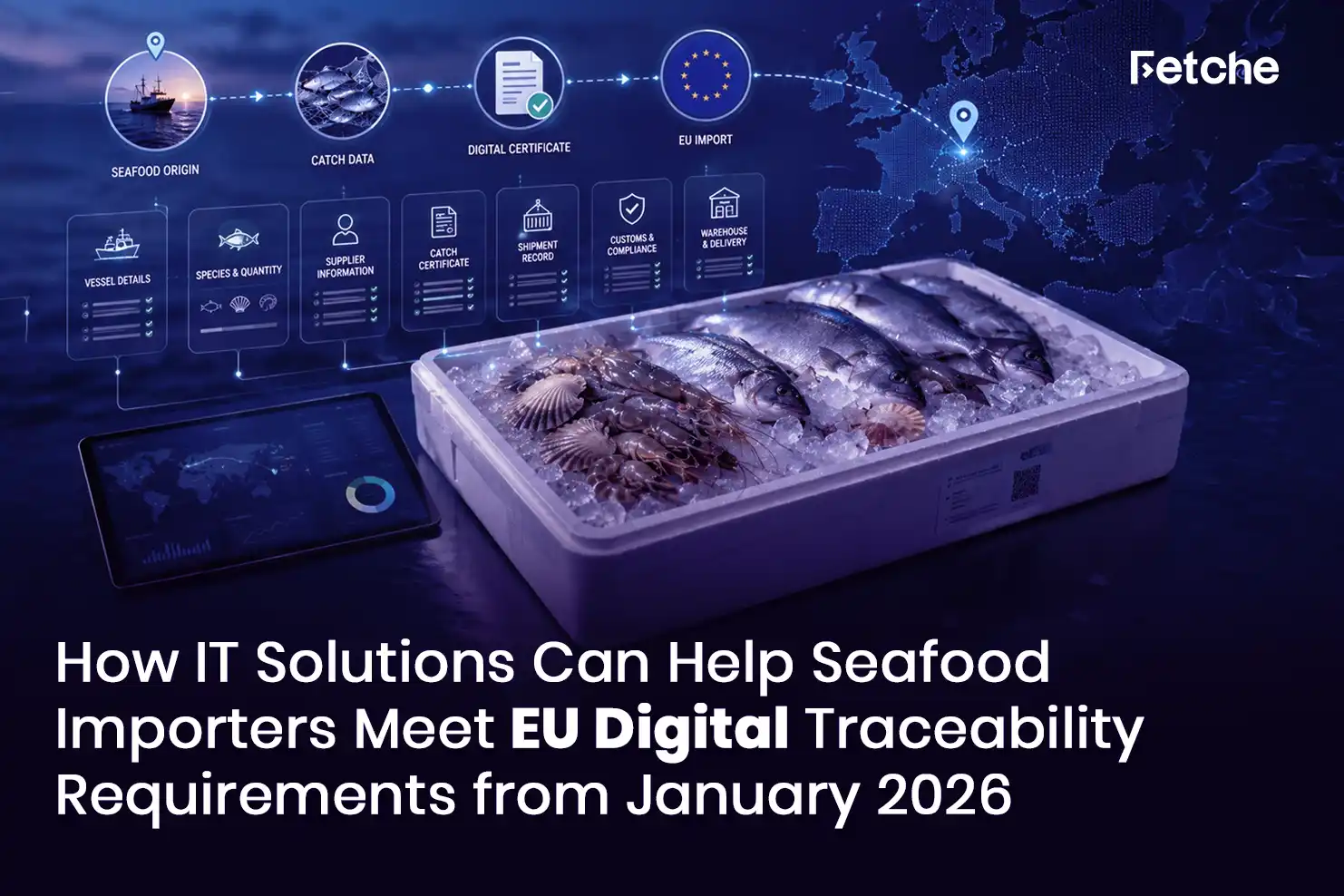
The EU seafood supply chain is becoming increasingly digital, and seafood traceability is now a critical part of import compliance. Since 10 January 2026, the EU CATCH system has become mandatory for the electronic submission and processing of catch certificates under the EU Illegal, Unreported and Unregulated (IUU) fishing control framework. For seafood importers, this means compliance can no longer depend on paper documents, scattered supplier records, or last-minute certificate checks. Importers need reliable access to catch information, supplier documentation, shipment details, and supporting records throughout the import process. The challenge is that this information often sits across emails, spreadsheets, supplier portals, customs systems, and logistics platforms. This is where integrated IT and ERP solutions can make a practical difference, not by replacing CATCH, but by helping importers organize, validate, connect, and retrieve the information required for efficient digital catch certification and EU seafood traceability.
What Is the EU CATCH System?
The EU CATCH system is the European Commission’s digital platform for managing catch certificates and related documentation under the EU IUU Regulation. It provides a standardized electronic environment for the submission and processing of information used to demonstrate the legal origin of fishery products entering the European Union.
For seafood importers, CATCH is particularly important because it brings greater digital structure to a process that previously relied heavily on documentation exchanged between different parties.
In simple terms:
- CATCH digitizes catch certificate management for relevant fishery product imports.
- Catch certificates provide information about the legal origin of fishery products.
- EU authorities use CATCH for electronic processing and verification of relevant documentation.
- Importers and supply-chain partners benefit from standardized digital workflows and easier access to compliance information.
It is important to understand that an ERP or logistics platform does not replace CATCH. Instead, internal IT systems can help businesses prepare and manage the operational and traceability data that supports CATCH processes.
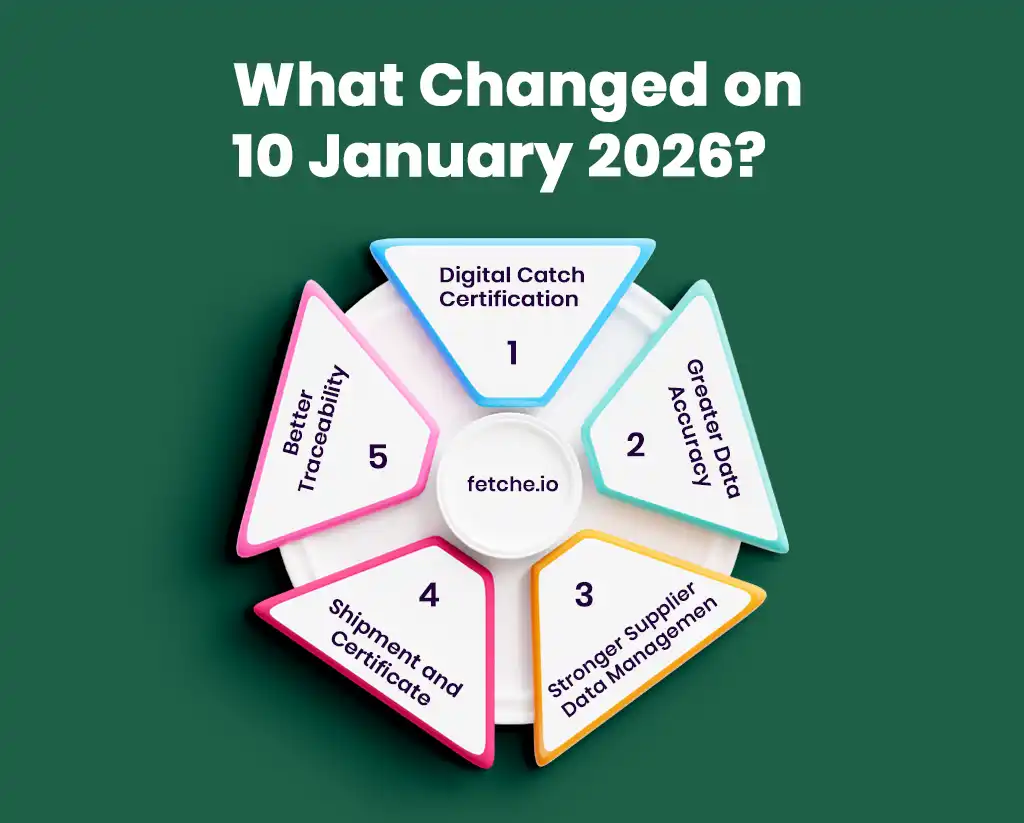
What Changed on 10 January 2026?
The key change is that the CATCH system became mandatory for the relevant catch certificate process from 10 January 2026. For EU seafood importers, this makes digital readiness an operational requirement rather than a future technology project.
The change has several practical implications for import operations.
- Digital Catch Certification: Relevant catch certificates are handled through the CATCH platform rather than relying on traditional paper-based processes.
- Greater Data Accuracy: Importers need reliable information about the catch, vessel, species, quantities, fishing activity, and origin. Inconsistent information can create verification issues.
- Stronger Supplier Data Management: Importers depend on suppliers, exporters, and other supply-chain participants for accurate information. Managing this information across multiple suppliers can become difficult without a centralized system.
- Shipment and Certificate Alignment: Catch certificate information should correspond with the actual shipment. Differences in quantities, product descriptions, dates, or other key details can result in additional checks or delays.
- Better Traceability: The move toward digital certification reinforces the need for clear fishery product traceability from source through import. Businesses need to know where information came from and be able to retrieve supporting records when required.
The exact documentation requirements can depend on the product, species, origin, processing history, and applicable rules. Importers should therefore confirm the requirements for individual consignments with the relevant authorities and supply-chain partners.
Why Seafood Importers Struggle With Digital Traceability
The challenge is rarely the lack of information. In many cases, importers have too much information spread across too many systems.
A typical seafood shipment may involve:
Supplier → exporter → vessel → processor → freight forwarder → port → customs → importer → warehouse
Each participant can generate important information. If those records are maintained separately, it becomes difficult to establish a single, reliable view of the shipment.
Common operational challenges include:
- Paper-Based Documentation: Physical certificates and supporting documents take longer to review, share, verify, and retrieve.
- Fragmented Supplier Information: Different suppliers may provide information in different formats, making standardization and validation difficult.
- Certificate Errors: Incorrect vessel details, quantities, product descriptions, or other information can create additional verification work.
- Shipment Delays: When documentation is incomplete or requires correction, the resulting delay can affect customs processing, cargo release, warehousing, and delivery schedules.
- Difficult Audit Preparation: Finding historical documents and connecting them to individual shipments can consume significant time when records are stored across multiple locations.
For importers handling high shipment volumes, these challenges can turn seafood import compliance into a time-consuming administrative process.
How IT Solutions Support Seafood Traceability
Digital transformation does not mean putting every compliance function into one application. Instead, businesses need systems that can connect operational information and make critical data accessible when it is needed.
An integrated IT or ERP platform can act as a central operational layer between suppliers, logistics teams, finance, warehouses, and compliance functions.
Centralized Data Management
An ERP can bring shipment, supplier, inventory, documentation, and logistics information into a structured environment.
Instead of searching through multiple emails and files, teams can access relevant information from a centralized record associated with the shipment.
Digital Document Management
Digital document management allows importers to organize catch certificates, commercial invoices, shipping documents, processing records, and other supporting information in one place.
This makes documents easier to retrieve when they need to be reviewed or shared.
Data Validation and Consistency
Integrated systems can help identify inconsistencies between shipment records and supporting documentation.
For example:
Shipment quantity ≠ certificate quantity → exception flagged → team reviews information before processing continues.
This type of workflow can reduce avoidable errors before they become larger compliance problems.
Shipment Tracking and Traceability
Connecting shipment tracking with documentation gives importers greater visibility into where cargo is and what compliance stage it has reached.
This becomes particularly valuable for temperature-sensitive seafood, where documentation delays can also create additional storage and handling requirements.
Compliance Workflows
Digital workflows can assign responsibilities, create review stages, and notify the right team when information is missing or requires attention.
Instead of relying on individual employees to remember every compliance step, businesses can create repeatable processes.
ERP Integration
An ERP for seafood import compliance can connect procurement, logistics, inventory, warehouse, documentation, and financial information.
This creates a stronger operational foundation for managing traceability because information does not have to be repeatedly entered into different systems.
What Data Should Seafood Importers Be Able to Trace?
Effective digital traceability in seafood processes depends on connecting the right information to the right shipment.
Depending on the applicable requirements, importers may need to manage information such as:
- Vessel and fishing activity details
- Species and product information
- Catch quantities
- Catch area and relevant origin information
- Supplier and exporter details
- Processing information
- Shipment and transport details
- Import documentation
- Catch certificate information
- Warehouse and inventory records
- Delivery documentation
The objective is not simply to store more data. It is to create a reliable connection between the product, its source, its documentation, and its movement through the supply chain.
Seafood Traceability and Cold Chain Operations
For seafood importers, traceability does not stop at compliance documentation. The product also needs to move through a controlled physical supply chain.
A delayed certificate can lead to delayed cargo release. Delayed cargo can increase storage time, handling requirements, and operational costs.
This creates a direct relationship between seafood supply chain traceability and logistics execution.
An integrated system can connect:
Certificate information → shipment → warehouse → transportation → delivery
This gives importers a more complete picture of the product journey while helping logistics teams respond faster when documentation or shipment issues occur.
How to Manage EU Catch Certificates Digitally
Importers can create a more reliable digital compliance process by following a structured workflow.
1. Collect Information Early
Request the required catch and supplier information before the shipment reaches the final import stage.
2. Standardize Supplier Data
Use consistent formats and required fields so information from different suppliers can be compared and validated.
3. Link Documents to Shipments
Connect certificates and supporting records to the relevant shipment or product record rather than storing them separately.
4. Validate Before Submission
Check key information for consistency before it enters the CATCH workflow.
5. Create Internal Approval Workflows
Assign responsibility for reviewing documentation and establish clear escalation procedures for missing or incorrect information.
6. Maintain an Audit-Ready Record
Keep relevant documentation and operational records organized so teams can retrieve them quickly when verification is required.
7. Connect Compliance With Logistics
Link compliance records with transportation, warehouse, inventory, and delivery information to maintain end-to-end visibility.
What Should Importers Look for in IT Solutions?
Not every logistics platform is designed to support the traceability needs of seafood businesses. When evaluating IT solutions for seafood traceability, importers should look beyond basic document storage.
Important capabilities include:
- Centralized shipment records
- Digital document management
- Supplier and customer data management
- Real-time shipment visibility
- Warehouse and inventory tracking
- Workflow automation
- Role-based approvals
- Audit trails
- Analytics and reporting
- ERP and accounting integration
- API or system integration capabilities
The most valuable solution is not necessarily the one with the most features. It is the one that can connect the operational data teams already use and make that information reliable, accessible, and actionable.
How Fetche Supports Digital Seafood Traceability
Fetche provides a connected logistics platform that can help seafood importers and their logistics partners bring shipment, freight, warehouse, transportation, and documentation workflows together.
Rather than replacing the EU CATCH platform, Fetche can serve as the operational layer that helps businesses organize the information surrounding each shipment.
- Track and Trace: Monitor shipment movements and maintain visibility across the cargo journey.
- Freight Management: Coordinate freight operations and maintain structured shipment information across logistics activities.
- Warehouse Management: Track inventory movement and warehouse operations to maintain greater visibility after cargo arrives.
- Digital Documentation: Reduce dependency on scattered physical records and keep relevant operational documents connected to shipments.
- Transportation Management: Coordinate transportation activities and delivery milestones through structured workflows.
- Analytics and Insights: Use operational data to identify delays, bottlenecks, and recurring inefficiencies.
- Connected Operational Data: Bring logistics functions together so teams have a clearer view of the shipment rather than relying on disconnected systems.
For seafood importers, this can create a more organized foundation for seafood import compliance, while making it easier for operational teams to work with the information required for digital traceability.
The Future of EU Seafood Traceability Is Connected
The move to mandatory digital CATCH processes is part of a wider shift in how the EU manages seafood import regulations. Traceability is moving away from isolated documents and toward connected digital information that can be verified more efficiently.
For importers, this means compliance teams cannot operate independently from procurement, logistics, warehousing, customs, and supply-chain operations. The businesses best prepared for this shift will be those that can connect information across the entire product journey.
Technology will play an increasingly important role, but the objective is straightforward: know what you imported, where it came from, what documentation supports it, where it is now, and whether the information across those records matches.
The 10 January 2026 CATCH requirement represents an important step in the EU’s move toward digital seafood traceability and stronger import controls. For seafood importers, the challenge is not simply submitting information through a new digital system. It is ensuring that the information behind each catch certificate is accurate, traceable, accessible, and connected to the corresponding shipment.
Paper documents, fragmented supplier data, manual verification, and disconnected logistics systems can make this process unnecessarily difficult. Integrated IT and ERP solutions can help solve these operational challenges by centralizing data, automating workflows, connecting documentation with shipments, and creating a clearer audit trail.
An effective ERP for seafood import compliance should therefore complement, not replace, the CATCH system. It should provide the operational visibility needed to prepare, manage, and maintain the data supporting digital catch certification.
Fetche helps businesses connect freight management, track and trace, warehouse operations, transportation, documentation, and analytics in one platform. By creating a more connected operational environment, it helps seafood businesses build stronger seafood supply chain traceability and respond more efficiently to the demands of digital import compliance.
Looking to strengthen your seafood traceability and logistics operations? Explore how Fetche can help you connect your logistics data, workflows, and shipment visibility in one platform.