
For years, the logistics industry has viewed sustainability as an added expense, a goal that benefits the environment but puts pressure on operational budgets. In 2026, that perception is rapidly changing. The most successful logistics companies are discovering that green logistics is not just about reducing carbon emissions; it is about running smarter, leaner, and more profitable operations.
This shift is proving that sustainability and profitability can go hand in hand. Rather than being a compliance burden, sustainable logistics has become a competitive advantage for freight forwarders, transport companies, and logistics operators looking to improve efficiency and strengthen their market position. From AI-powered route optimization and real-time fleet visibility to data-driven logistics management, modern digital tools are making green logistics measurable, practical, and achievable for businesses of all sizes. In 2026, the question is no longer whether logistics companies can afford to go green, it’s whether they can afford not to.
What Is Green Logistics?
Green logistics is the practice of reducing the environmental impact of logistics operations while improving efficiency and profitability. It focuses on moving goods in a smarter way by minimizing fuel consumption, waste, and unnecessary resource usage across the supply chain. For many logistics companies, sustainability is becoming a key differentiator that helps attract customers, strengthen partnerships, and prepare for future regulations.
At its core, green logistics aims to lower carbon emissions without compromising operational performance. This includes adopting sustainable freight forwarding practices, improving energy efficiency, and supporting the broader goal of carbon-neutral shipping through better planning and optimized operations.
Green Logistics Goes Beyond Electric Vehicles
A common misconception is that green logistics requires expensive investments in electric fleets or major infrastructure changes. In reality, many of the biggest sustainability gains come from improving everyday logistics operations.
Some of the key practices include:
- Smarter route planning to reduce fuel consumption and unnecessary mileage.
- Warehouse efficiency through optimized layouts, inventory management, and energy-conscious operations.
- Better fleet utilization to minimize empty trips and maximize vehicle capacity.
- Load optimization to transport more goods with fewer journeys.
- Digital documentation to reduce paperwork and streamline logistics processes.
The goal of green logistics is simple: eliminate waste at every stage of the supply chain. In 2026, green logistics is proving that what’s good for the environment can also be good for business.
Why Logistics Companies Are Going Green
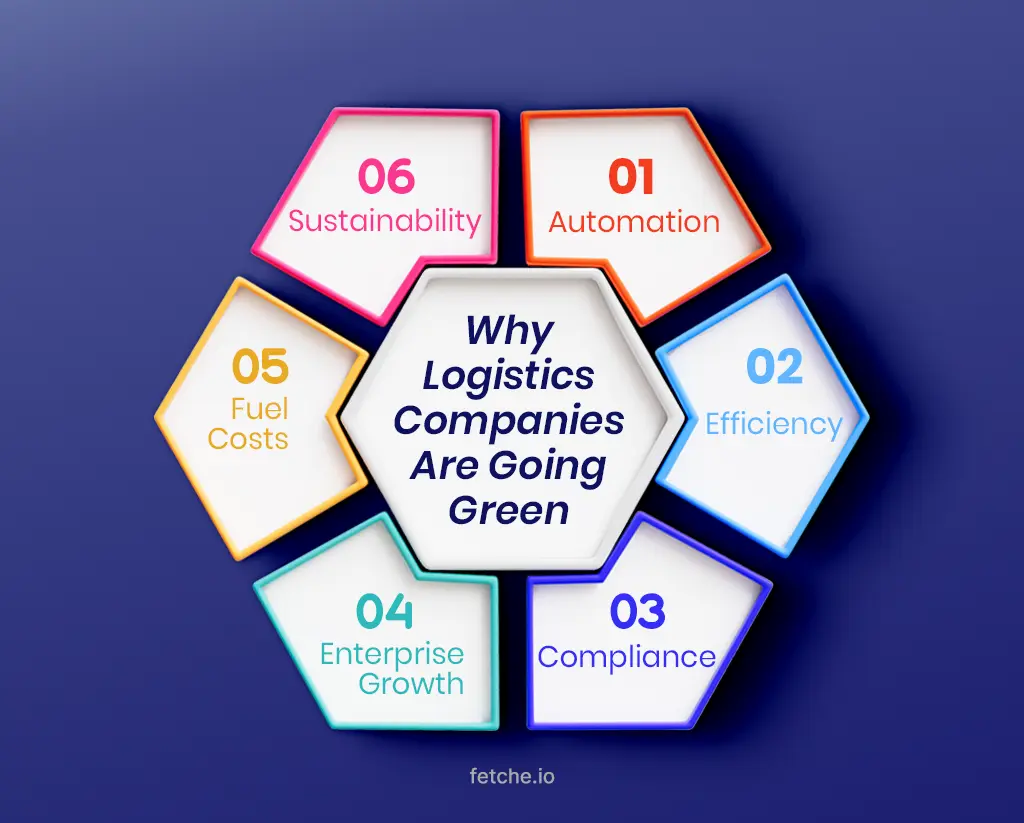
Green logistics is no longer driven by environmental concerns alone. Rising costs, changing customer expectations, and evolving industry standards are making sustainability a practical business strategy. Here are the key factors accelerating the shift.
- Rising Fuel Costs Demand Smarter Operations: Reducing empty miles, optimizing routes, and improving fleet utilization help lower both fuel consumption and transportation costs.
- Customers Expect Sustainable Supply Chains: Companies with greener operations gain a competitive advantage and strengthen customer relationships.
- ESG and Regulatory Requirements Are Growing: Adopting green logistics practices helps businesses stay compliant and prepared for future regulations.
- Large Enterprises Prefer Sustainable Logistics Partners: Many global manufacturers, retailers, and e-commerce brands now evaluate the sustainability performance of their logistics providers. Demonstrating greener operations can open doors to larger business opportunities.
- Operational Efficiency Improves Profit Margins: Better route planning, higher vehicle utilization, and digital workflows lower operating costs while improving productivity and profitability.
- Technology Makes Sustainability Achievable: AI, real-time tracking, and logistics management platforms help businesses measure performance, optimize resources, and make sustainability a repeatable part of everyday operations.
The Biggest Cost Drivers That Also Create Carbon Emissions
Many logistics businesses assume that reducing emissions requires major investments. In reality, some of the biggest sources of carbon emissions are also the biggest operational inefficiencies. Addressing the challenges below helps companies lower costs while building greener logistics operations.
- Empty Miles- Empty miles increase fuel costs and are one of the largest contributors to carbon emissions in green logistics operations.
- Poor Route Planning- Inefficient route planning leads to unnecessary mileage and fuel consumption, making AI route optimization a fuel-saving strategy.
- Low Vehicle Utilization- Underutilized fleets increase transportation costs and reduce the efficiency of sustainable logistics operations.
- Warehouse Inefficiencies- Poor warehouse layouts create unnecessary movement and energy consumption, affecting both costs and sustainable freight forwarding performance.
- Idle Vehicles- Long waiting times during loading, unloading, or traffic congestion burn fuel without adding value.
- Manual Paperwork- Paper-based processes slow operations, create errors, and increase administrative overhead.
- Excess Inventory Movement- Frequent handling, repositioning, and transferring of stock consume additional time, labor, and energy.
Eliminating waste is one of the simplest ways to make logistics more sustainable and profitable.
Practical Green Logistics Strategies That Reduce Costs
Green logistics does not always require major capital investments or a complete operational overhaul. Many of the most effective sustainability initiatives involve optimizing existing processes to reduce waste, improve efficiency, and lower operating costs. Here are some practical strategies that help logistics companies cut both carbon emissions and expenses.
AI Route Optimization for Smarter Deliveries
AI-powered route planning analyzes traffic conditions, delivery schedules, and vehicle capacity to identify the most efficient routes. This approach not only improves delivery performance but also generates significant fuel savings from AI route optimization.
Benefits:
- Lower fuel consumption
- Faster deliveries
- Reduced idle time
- Fewer unnecessary miles
Better Fleet Utilization
A well-managed fleet can transport more goods with fewer trips. Smart resource planning helps businesses maximize vehicle capacity and improve overall operational efficiency.
Key practices:
- Strategic vehicle allocation
- Optimized capacity planning
- Efficient driver scheduling
Sustainable Freight Forwarding
Modern sustainable freight forwarding focuses on moving cargo more efficiently while reducing environmental impact. Better planning allows businesses to minimize unnecessary transportation activities.
Strategies include:
- Shipment consolidation
- Multimodal transport solutions
- Smarter carrier selection
Warehouse Optimization
Warehouses play a significant role in green logistics. Efficient layouts and inventory management reduce unnecessary movement while improving productivity.
Best practices:
- Shorter travel paths for goods
- Better inventory placement
- Energy-efficient warehouse operations
Digital Documentation
Replacing manual paperwork with digital processes improves speed, accuracy, and operational sustainability.
Digital solutions include:
- Electronic Proof of Delivery (ePOD)
- Paperless invoicing
- Automated digital workflows
Predictive Maintenance
Regular maintenance based on real-time vehicle data helps prevent unexpected breakdowns and improves fleet performance.
Key advantages:
- Reduced vehicle downtime
- Improved fuel economy
- Extended vehicle lifespan
Whether through AI-driven route optimization, sustainable freight forwarding, warehouse efficiency, or digital workflows, businesses can reduce costs and carbon emissions at the same time. That’s what makes green logistics a practical business strategy rather than just a sustainability initiative.
How AI Is Transforming Green Logistics
Artificial Intelligence is helping logistics companies make smarter, faster, and more sustainable decisions. By analyzing large volumes of operational data, AI reduces waste, improves efficiency, and supports green logistics initiatives.
- AI Predicts Demand
AI forecasts demand patterns, helping businesses avoid overstocking, underutilization, and unnecessary transportation.
- AI Optimizes Routes
AI identifies the most efficient delivery routes, reducing travel distance, fuel consumption, and delivery times.
- AI Improves Fleet Performance
AI helps allocate vehicles and resources more effectively, maximizing fleet utilization and operational efficiency.
- AI Reduces Fuel Consumption
By minimizing idle time, avoiding congestion, and optimizing routes, AI helps lower fuel costs and carbon emissions.
- AI Identifies Operational Waste
AI detects inefficiencies across logistics operations, enabling businesses to reduce delays, empty runs, and unnecessary expenses.
Measuring Sustainability: What Logistics Companies Should Track
Building a greener logistics operation is not just about adopting new technologies or reducing fuel consumption, it is about understanding where inefficiencies exist and taking informed action to eliminate them. Many logistics companies set sustainability goals but struggle to quantify their progress because they lack the right operational data. Without measurable metrics, it becomes difficult to identify waste, optimize resources, or demonstrate the impact of sustainability initiatives.
The key to successful green logistics is to treat sustainability as a performance metric rather than a separate business objective. By tracking operational indicators given below that influence both costs and carbon emissions, logistics companies can make smarter decisions while improving profitability and resilience.
- Fuel Consumption
- Empty Kilometers
- Fleet Utilization
- Delivery Success Rates
- Carbon Emissions
- Idle Time
- Vehicle Productivity
- Cost Per Shipment
- ESG Reporting
The Role of Green Logistics Software in 2026
As the logistics industry evolves, sustainability is becoming a core business objective rather than an optional initiative. However, achieving greener operations is difficult without accurate data and operational visibility. This is where green logistics software for freight companies in 2026 plays a critical role. Modern logistics platforms help businesses monitor, manage, and optimize every stage of the supply chain, making it easier to reduce fuel consumption, improve resource utilization, and lower carbon emissions while maintaining profitability. In the future of logistics, companies that rely on manual processes and disconnected systems will struggle to keep pace with increasing customer expectations and sustainability requirements.
The next generation of logistics will be powered by intelligent, data-driven platforms that connect every aspect of operations. Features such as fleet analytics, AI-powered route optimization, real-time visibility, driver management, digital Proof of Delivery (POD), carbon tracking, and operational dashboards enable businesses to make informed decisions quickly and efficiently. A logistics ERP with carbon tracking and ESG reporting goes a step further by helping companies measure sustainability alongside operational performance, turning environmental goals into measurable business outcomes. As green logistics becomes the industry standard, software will no longer simply support logistics operations, it will drive smarter, more efficient, and more sustainable supply chains.
Green logistics software helps companies in:
- Fleet analytics
- Route optimization
- Real-time visibility
- Driver management
- POD digitization
- Carbon tracking
- Logistics ERP with carbon tracking and ESG reporting
- Operational dashboards
How Fetche Makes Green Logistics Practical
Fetche is designed to help logistics companies make sustainability a part of their everyday operations by connecting critical logistics functions into one intelligent platform.
Sustainability becomes achievable when logistics operations become visible. Many businesses already have the vehicles, warehouses, and workforce they need to operate more sustainably, they simply lack the tools to identify inefficiencies and optimize resources. Instead of requiring major operational changes, the right logistics platform helps businesses reduce waste, improve decision-making, and build greener operations through better visibility and control.
The biggest challenge in green logistics is not knowing where waste exists. Unnecessary mileage, idle vehicles, inefficient routes, excess inventory movement, and manual processes all increase both operating costs and carbon emissions. Fetche helps businesses uncover these inefficiencies and turn them into opportunities for improvement through real-time visibility and intelligent logistics management.
Here’s why Fetche is popular as the green logistics software for freight companies in 2026:
- Fleet Analytics for Smarter Resource Utilization– Gain insights into fleet performance, fuel usage, and vehicle productivity to reduce operational waste and improve efficiency.
- AI-Assisted Route Optimization– Plan smarter routes that reduce unnecessary mileage, lower fuel consumption, and improve delivery timelines.
- Transportation Management– Coordinate shipments and transport operations through a centralized system that improves planning and minimizes inefficiencies.
- Driver Application– Keep drivers connected with real-time updates and digital workflows, reducing delays and unnecessary communication.
- Real-Time Tracking and Visibility– Monitor shipments and vehicles at every stage of the journey, enabling faster decisions and proactive issue resolution.
- Smarter Warehouse Management– Improve inventory movement and warehouse efficiency while reducing unnecessary handling and storage costs.
- Digital Proof of Delivery– Replace paper-based processes with electronic PODs to simplify documentation and support sustainable operations.
- Analytics and Reporting– Access real-time operational data to measure performance, identify inefficiencies, and make data-driven improvements.
- Better Resource Optimization– Allocate vehicles, drivers, and logistics resources more effectively to maximize productivity and reduce unnecessary costs.
Green logistics does not have to start with expensive infrastructure or a complete fleet transformation. It starts with making existing operations smarter. By helping businesses reduce waste, improve efficiency, lower fuel consumption, and optimize resources, Fetche enables logistics companies to build sustainable operations that are good for both the environment and the bottom line.
Companies that reduce empty miles, optimize routes, improve fleet utilization, and digitize operations can lower emissions while strengthening profitability. Sustainability and operational efficiency are no longer competing priorities, they work together to build more resilient, cost-effective supply chains.
With intelligent tools for fleet management, route optimization, warehouse operations, real-time visibility, and analytics, Fetche helps logistics businesses make sustainable practices measurable, practical, and scalable.
Ready to build a greener, more efficient logistics operation? Discover how Fetche can help you reduce costs, improve visibility, and drive long-term growth. Contact us today.