
Let’s skip the pleasantries. If you’re managing temperature controlled logistics, you already know the stakes. A single multi-stop reefer load goes out of spec, and you’re suddenly staring down a six-figure spoilage claim. Worse, an auditor walks in requesting historical temperature logs for a specific batch, and your team spends hours cross-referencing standalone telematics portals with your WMS.
That isn’t a tracking strategy; it’s a massive operational liability.
For 3PLs and specialized distributors, having temperature sensors in your trailers and warehouses is no longer enough. The real challenge is data fragmentation. When your IoT sensors don’t communicate natively with your core operational platform, you create dangerous blind spots. This is exactly why supply chain leaders are shifting away from piecemeal tech stacks and leveraging modern logistics ERPs as dedicated cold chain visibility software.
Here is a look at why fragmented tracking is costing you money, and how unifying your operations inside an ERP is the only way to bulletproof your compliance.
The True Cost of Fragmented Tracking
You probably have hardware. Most fleets and warehouses do. But what happens when a temperature excursion triggers an alert in a standalone portal at 2:00 AM?
If that alert isn’t tied directly to a specific load, customer, and routing schedule inside your primary system, your dispatchers lack the context to act quickly. They have to log into a separate dashboard, identify the trailer, look up the active BOL in the TMS, and figure out what cargo is actually at risk. By the time they connect the dots, the load is ruined.
This disconnect causes three major headaches:
- Delayed Response Times: Reactive alerts lead to irreversible product damage and high insurance premiums.
- Audit Panic: Compiling reports for regulatory bodies requires manual data entry, increasing the risk of human error.
- Disputed Claims: When receivers reject a load, proving the chain of custody and temperature integrity is nearly impossible without consolidated documentation.
Regulatory Pressures: The Proof is in the Data
The days of passing an audit with a stack of printouts and a handshake are over. With the enforcement of FSMA 204, along with strict GDP guidelines for pharmaceuticals and continuous HACCP requirements for food safety, the burden of proof is heavier than ever.
Regulators and key account clients don’t just want to know that your trailer was cold; they want to know that their specific pallet stayed between 2°C and 8°C from the origin dock to the final delivery.
When operations teams ask how to maintain cold chain compliance without adding administrative headcount, the answer lies in system architecture. Compliance shouldn’t be an afterthought or an end-of-month scramble. It must be a by product of your daily operations. This requires a system where the temperature log is permanently stamped to the inventory record.
Why You Need ERP Temperature Tracking
This is where a purpose-built logistics ERP changes the game. By utilizing logistics erp software that inherently supports IoT integrations, you eliminate the gap between your physical assets and your operational data.
ERP temperature tracking works by ingesting telematics and sensor data directly into the platform where your freight and inventory are managed. When a temperature threshold is breached, the ERP immediately flags the exact SKU, notifies the assigned driver or warehouse floor manager, and logs the event against the customer’s specific handling rules.
Instead of toggling between a WMS, a TMS, and a proprietary sensor dashboard, your team operates from a single source of truth
Fetche : Automated, Audit-Proof Compliance
If you are actively comparing solutions to fix your tracking gaps, bolt-on software won’t solve the root issue. You need an infrastructure built for unified visibility.
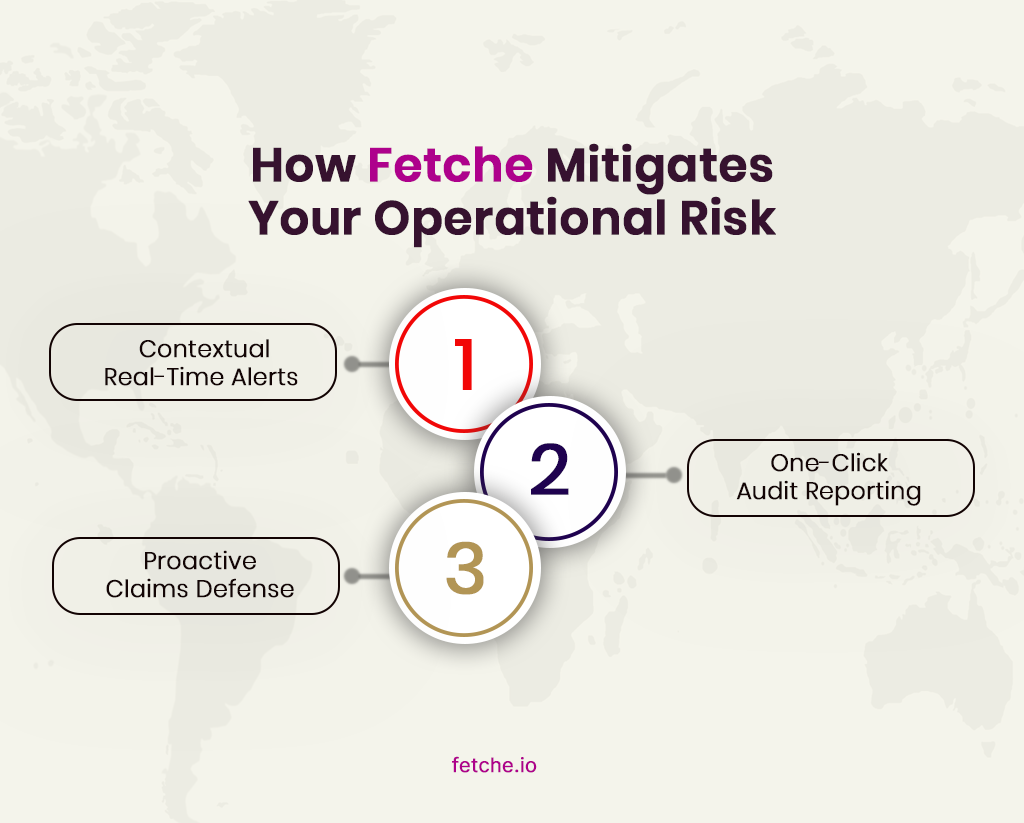
Fetche.io is designed specifically to act as the central nervous system for your supply chain, integrating automated cold chain monitoring seamlessly into your daily workflows. Here is how Fetche.io mitigates your operational risks:
- Contextual Real-Time Alerts: Fetche.io doesn’t just tell you a trailer is getting warm. It tells you exactly whose freight is inside, what the contractual temperature requirements are, and automatically initiates rerouting or corrective action workflows.
- One-Click Audit Reporting: Stop chasing data. Fetche.io ties continuous temperature logs directly to the shipment lifecycle and inventory records. When an auditor or customer asks for proof of compliance, you can generate comprehensive, unalterable reports in seconds.
- Proactive Claims Defense: With immutable data tying temperature records to location and time, you have absolute proof of integrity at the moment of delivery, stopping unfair receiver rejections and chargebacks in their tracks.
The Bottom Line
Managing temperature controlled logistics on a fragmented tech stack is a gamble you will eventually lose. Every delayed alert and manual audit report eats into your margins and damages customer trust.
To achieve true cold chain compliance, you need more than just a network of sensors — you need a platform that makes that data actionable, contextual, and audit-ready without manual intervention.
Stop letting data silos put your high-value freight at risk. It’s time to upgrade your infrastructure. Explore how Fetche.io can transform your operations from reactive and fragmented to automated and audit-proof.
FAQ
Having the raw data just isn’t the same as making sense of it in real time. If a trailer’s sensor pings a standalone dashboard with a temperature warning at 2:00 AM, your dispatchers are left scrambling. They have to bounce between different portals just to figure out which truck it is and what freight is actually in danger. By the time they finally connect those dots manually, the cargo is already ruined. You need the temperature alerts tied directly to your active shipment details so your team knows exactly what’s at stake instantly.
Think of an integrated ERP as the central nervous system for your entire operation. Instead of logging into a separate warehouse system, transportation system, and tracking portal, everything happens under one roof. If a cooling threshold is broken, the software instantly highlights the exact products at risk, pings the appropriate manager, and displays the customer’s mandated response procedures.
Absolutely. Regulators don’t care about a general log showing your trailer was cold—they want concrete proof that a specific pallet stayed perfectly chilled from the origin dock to the final delivery. Trying to match sensor logs with shipment records manually is a recipe for human error and failed audits. An integrated system permanently stamps the temperature history directly onto the inventory record as part of your daily workflow. It turns a stressful audit into a simple one-click report.
Disputed claims usually happen because it’s hard to prove the chain of custody right at the loading dock. If a receiver tries to reject a load citing spoilage, an integrated ERP gives you an unalterable, time-stamped record of the temperature linked directly to the delivery location. You can hand over undeniable, real-time evidence of the load’s integrity right then and there, stopping bogus chargebacks and receiver rejections dead in their tracks.
Bolt-on software acts like a band-aid; it keeps your data separated in the background. Fetche.io is built from the ground up specifically to give you unified visibility. Instead of just sending a generic alert that a truck is getting warm, it provides what we call “contextual alerts.” It knows whose freight is inside and what the contract demands, automatically kicking off corrective workflows or rerouting procedures without anyone having to manually piece the puzzle together.
It’s actually the exact opposite—the whole point is to eliminate the busywork. Because the system automatically ties the continuous temperature logs to the shipment lifecycle, nobody has to sit there doing manual data entry or end-of-month reporting. Compliance just becomes a natural byproduct of your everyday operations. You save hours of administrative headcount and free your team up to focus on moving freight instead of chasing down data.