

Global trade has grown more complex than ever. Freight forwarders, customs brokers, and import/export managers are under constant pressure to move goods faster while staying compliant with evolving regulations. Yet many logistics businesses still rely on spreadsheets, manual documentation, and fragmented communication systems, resulting in delays, compliance errors, and costly penalties.
This is where Customs Clearance Software becomes a game-changing solution. By automating documentation, compliance checks, and communication with customs authorities, modern platforms are transforming how businesses manage cross-border trade.
Companies that adopt advanced customs automation tools will gain a significant competitive advantage. Let’s explore how customs clearance software will transform global trade in 2026, why logistics businesses must adapt, and how solutions like Fetche help organizations streamline operations, ensure compliance, and scale efficiently.
The Growing Complexity of Global Trade
Governments introduce new compliance rules, documentation requirements, and digital customs systems every year. For logistics businesses operating across regions like Singapore, India, and the Philippines, staying compliant can be challenging. Implementing a Logistics ERP in Singapore, Logistics ERP Software in India, and Logistics ERP Software in the Philippines helps streamline regulatory compliance and maintain accurate documentation.
Common challenges businesses face include:
- Manual customs documentation leading to errors
- Delays in shipment approvals due to incomplete filings
- Difficulty tracking shipment status across multiple systems
- Compliance risks due to changing trade regulations
- Lack of centralized data for audits and reporting
According to industry reports, documentation errors are responsible for nearly 30% of shipment delays in international logistics. This directly impacts delivery timelines, operational costs, and customer satisfaction. Modern customs compliance software addresses these issues by automating document generation, validating compliance requirements, and providing real-time shipment visibility.
How Customs Clearance Software Works
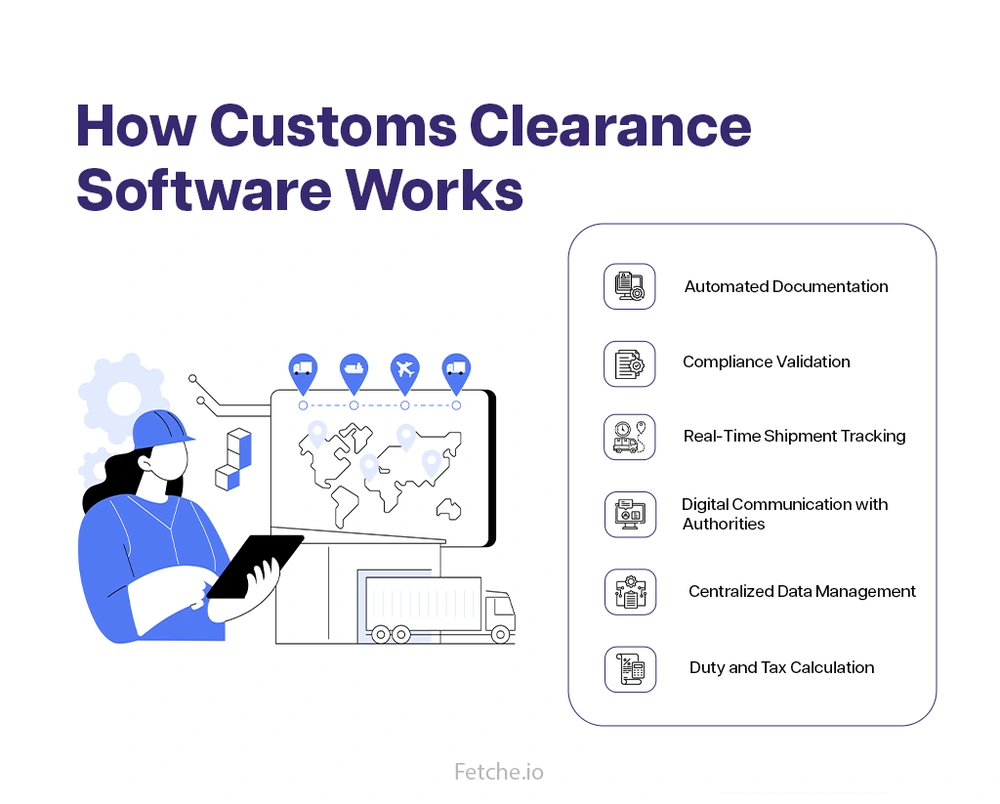
At its core, the software acts as a centralized platform that manages customs documentation, regulatory compliance, and shipment tracking. Here’s how customs clearance software works:
1. Automated Documentation
The system automatically generates required customs documents such as commercial invoices, packing lists, and declaration forms. This reduces manual effort and eliminates common data entry errors.
2. Compliance Validation
Built-in compliance engines ensure that shipments meet regulatory requirements before submission to customs authorities.
3. Real-Time Shipment Tracking
Logistics teams can monitor the status of shipments, customs approvals, and documentation updates from a single dashboard.
4. Digital Communication with Authorities
Many modern platforms integrate directly with customs systems to submit declarations electronically and receive updates instantly.
5. Centralized Data Management
All shipment and compliance data are stored securely in a centralized system, making audits and reporting much easier.
This level of automation helps logistics businesses reduce delays, improve accuracy, and accelerate cross-border shipments.
Why Customs Clearance Software Will Be Essential in 2026
The logistics industry is entering a new era of digital transformation. Governments and customs authorities worldwide are increasingly adopting digital filing systems and automated compliance frameworks.
By 2026, several trends will make Customs Clearance Software a critical business tool:
1. Digital Customs Systems Worldwide
Countries are shifting toward paperless customs clearance processes. Businesses must adopt digital tools to integrate with these systems.
2. Increasing Compliance Requirements
Trade agreements, tariff regulations, and security measures continue to evolve. Software solutions help businesses stay compliant automatically.
3. Faster Cross-Border Trade Expectations
E-commerce growth demands faster delivery timelines. Automation reduces processing times and accelerates customs approvals.
4. Data-Driven Logistics Decisions
Modern supply chains rely heavily on data analytics. Customs software provides valuable insights into shipment performance, compliance risks, and operational efficiency.
5. Cost Optimization
Automation reduces manual labor, prevents penalties, and minimizes shipment delays, resulting in significant cost savings.
For logistics companies aiming to stay competitive in global markets, adopting customs automation tools will no longer be optional.
Top Customs Clearance Software Platforms in 2026
As the logistics industry evolves, several platforms are emerging as leaders in customs automation.
The top customs clearance software platforms in 2026 will share several characteristics:
- Cloud-based architecture
- AI-driven compliance validation
- Seamless ERP and supply chain integration
- Advanced analytics and reporting
- Scalable infrastructure for global trade
Businesses will increasingly prioritize platforms that provide end-to-end logistics visibility, rather than standalone customs tools.
Integrated systems help logistics companies manage transportation, warehousing, inventory, and customs clearance from a single platform.
Best Customs Clearance Software for Freight Forwarders and Small Businesses
Choosing the right software platform is crucial for maximizing operational efficiency.
When evaluating the best customs clearance software for freight forwarders, businesses should look for the following features:
- Automated customs documentation
- Real-time shipment tracking
- Compliance validation tools
- Integration with logistics and ERP systems
- Scalable cloud infrastructure
- Multi-country regulatory support
These features are especially important for customs clearance software for small businesses, where teams may not have large compliance departments.
Small and medium-sized logistics businesses often face the biggest operational challenges because they handle growing shipment volumes with limited resources. Automation helps them compete with larger logistics providers while maintaining efficiency and compliance. This is why adopting the Best Freight Forwarding ERP in 2026 is becoming essential for SMB logistics companies aiming to scale operations, improve shipment visibility, and streamline workflows without increasing operational complexity.
How Fetche Is Transforming Global Trade in 2026
Fetche is designed to meet the evolving needs of modern logistics businesses. As a cloud-based ERP logistics management platform, Fetche helps companies streamline supply chain operations while ensuring efficient customs clearance.
Here’s how Fetche supports global trade in 2026:
- End-to-End Logistics Management: Fetche integrates transportation, warehousing, inventory, and customs processes into one unified system.
- Automated Customs Compliance: The platform simplifies regulatory compliance by automating customs documentation and validation.
- Real-Time Shipment Visibility: Businesses gain complete visibility into shipments, approvals, and documentation updates through a centralized dashboard.
- Reduced Operational Costs: Automation eliminates manual processing errors and minimizes delays, helping companies reduce operational costs.
- Scalable for Global Logistics: Whether you are a freight forwarder, customs broker, or e-commerce exporter, Fetche scales with your business and supports global trade operations.
By combining logistics ERP capabilities with powerful customs clearance software, Fetche empowers businesses to operate more efficiently in the rapidly evolving global trade environment.
Global trade is becoming faster, more digital, and increasingly regulated. Businesses that continue relying on manual processes will struggle to keep up with growing compliance requirements and customer expectations. Adopting advanced Customs Clearance Software allows logistics companies to automate documentation, reduce compliance risks, and accelerate cross-border shipments. As digital trade ecosystems expand, these tools will become essential for freight forwarders, customs brokers, and global exporters.
Platforms like Fetche are leading this transformation by providing integrated logistics management and customs automation capabilities in one powerful solution. Upgrade to Fetche today and experience smarter, faster, and more efficient customs clearance for your global trade operations.
FAQ
Customs clearance software is a digital platform that automates customs documentation, regulatory compliance checks, and shipment approvals. It helps logistics companies reduce manual paperwork, avoid documentation errors, and accelerate cross-border trade processes.
Customs clearance software improves efficiency by automating document generation, validating compliance requirements, and providing real-time shipment tracking. This reduces delays, minimizes human errors, and ensures faster customs approvals for international shipments.
Logistics ERP software integrates multiple logistics processes such as transportation, warehousing, inventory management, and customs documentation into one centralized platform. This improves operational visibility and helps companies manage international shipments more efficiently.
Yes. Logistics ERP software often includes compliance management tools that help businesses follow customs regulations, track documentation, and maintain accurate records for audits, reducing the risk of penalties and shipment delays.
The Best Freight Forwarding Software should include automated documentation, shipment tracking, customs integration, and centralized data management. These features help freight forwarders manage international shipments more efficiently while improving operational transparency.
The Best Freight Forwarding Software helps small logistics businesses automate manual processes, manage documentation more efficiently, and track shipments in real time, allowing them to compete with larger logistics providers.