
All around the world logistics companies are plagued by operational issues. From rising costs to growing customer expectations, the logistics challenges are significant enough to disrupt business flow.
However, it is important that these challenges in logistics are overcome. After all, logistics and supply chain management are cornerstones of global trade. Realizing this, we have made a list of challenges that logistics companies face. Moreover, we have included practical solutions to help businesses overcome these issues.
Top Logistics Challenges for Businesses
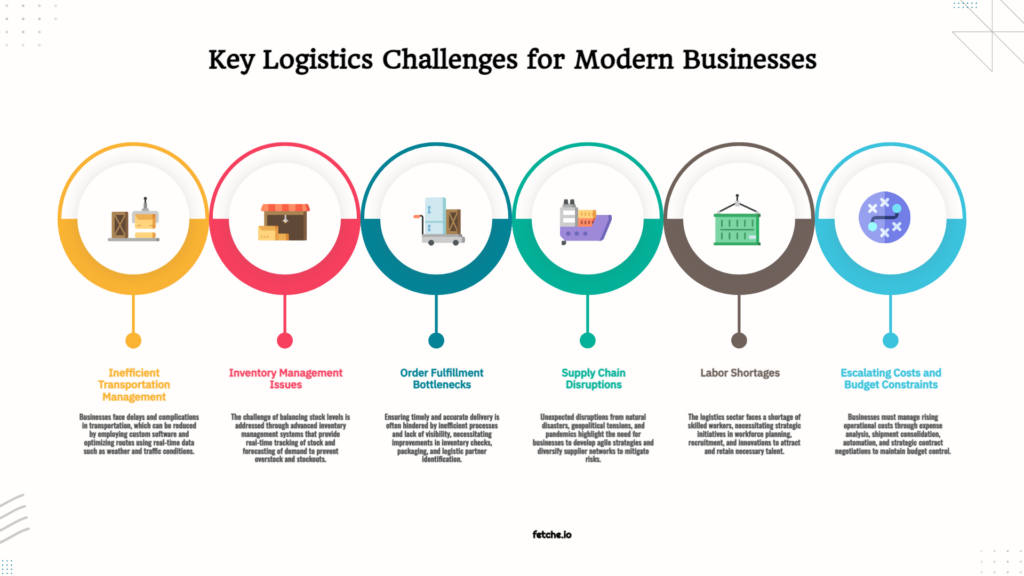
Operational inefficiencies burden the logistics industry. Eventually, these issues escalate costs and tarnish customer trust. If you have a logistics company, chances are that you might not even be aware of your shortcomings. But learning and improving can only happen once you identify where your business is falling short. So, let’s look at a few challenges in logistics that most companies face. This will help you identify if your company has the same issue.
1. Warehouse Management Inefficiencies
Inefficient warehouse management is a major challenge. Disorganized storage, a slow picking process, and error-prone manual inventory tracking are common. This leads to increased costs and order fulfillment delays, not to mention time waste.
Solution – Automation is what you seek. The inefficiencies in warehouse management can be rectified using a good Warehouse Management System (WMS). A WMS will streamline operations, optimize space, automate inventory tracking, and speed up order processing. This way you will save time, reduce errors, and increase overall efficiency.
2. Fleet Management Challenges
Fleet management is as complex as it gets. Vehicle maintenance, fuel costs, and route planning have to be scrupulously managed. If not, it can lead to other complications and losses. For example, a poorly maintained vehicle can break down. This will result in increased downtime and delivery delays. Similarly, a lack of route optimization wastes fuel and time, leading to financial loss.
Solution – The solution to this problem is fleet management software. Fleet management software can provide real-time tracking, predictive maintenance alerts, and route optimization tools. This way your fleet/vehicles will operate efficiently, reducing costs and improving delivery performance.
3. Inefficient Supply Chain Management
Logistics and supply chain management involves coordinating multiple stakeholders. Inefficiency in this regard can lead to miscommunication and delays. In essence, a poorly managed supply chain creates bottlenecks, disrupts schedules, and reduces customer satisfaction.
Solution – Have you heard of supply chain management software? That’s what you need. This software provides you with tools to improve communication, provide real-time updates, and enhance supply chain visibility.
4. Inventory Management Difficulties
Overstocking and understocking can have serious consequences. Overstocking ties up capital and space, while understocking leads to missed sales. Therefore it is utterly important to maintain optimal inventory levels. And this is not possible through manual tracking.
Solution – Modern inventory management systems are your way out. These systems aid in inventory optimization. They give you accurate data, automate stock tracking, and forecast demand.
5. Delivery Delays
Poor planning, traffic issues, or warehouse inefficiencies can lead to delivery delays. And this leads to customer dissatisfaction. This is a serious issue. And you stand to lose customer trust because of it. Your customer might even switch to a competitor if there are repeated delays.
Solution – Improved logistics planning is the key here. So how do you achieve that? All you need to do is use tools like route optimization software and real-time tracking. This will ensure faster deliveries.
6. Rising Transportation Costs
Fuel prices are rising. So are toll fees and vehicle maintenance costs. All these expenses add to your total transportation cost. This is now becoming a major concern among logistics companies.
Solution – The answer to your dilemma is route optimization and ensuring full truckloads. This will eliminate inefficient routes and underutilized vehicles which can inflate costs.
7. Outdated Technology
Innovation might be the only way to stay ahead of the competition. There are numerous logistics companies out there. So the technology you use must be what helps you stand out. However, a lot of companies fail to switch to modern systems. They rely on outdated systems that are becoming increasingly inefficient. These systems do not provide real-time updates and do not integrate with modern tools. This results in slower processes, errors, and lost opportunities for improvement.
Solution – The solution is to upgrade to a modern logistics management system. Look for cloud-based platforms and integrated systems. This way you will benefit from real-time updates, better communication, and data-driven decisions.
8. Real-Time Tracking Problems
Today, every customer expects transparency in delivery timelines. No one wants to second guess when their package will arrive. However, many companies still struggle to provide accurate updates. This creates frustration for customers and erodes trust.
Solution – All you need to do is invest in real-time logistics tracking software. This will offer end-to-end visibility and hence improve customer satisfaction.
How Fetche Can Help Overcome These Challenges
We just addressed the common challenges in logistics. And we suggested tools and software that could help overcome these challenges. But patchwork fixes would not address every issue. In fact, these logistics operation issues demand a comprehensive system that tackles inefficiencies at their core. Fetche is one such comprehensive system. It is an ERP that integrates all aspects of warehouse management, fleet monitoring, and supply chain coordination into a single, user-friendly platform.
With Fetche you can:
- Optimize warehouse operations – The ERP warehouse management system streamlines storage, automates inventory tracking, and reduces errors.
- Improve fleet efficiency – Fetche plans optimal routes, monitors vehicles in real time, and ensures timely maintenance.
- Enhance supply chain visibility – Coordinate with suppliers, distributors, and customers.
- Reduce costs – Use data analytics to cut down transportation and operational expenses.
- Boost customer satisfaction – Real-time tracking and faster order fulfillment.
Conclusion
Logistics challenges are far from unsolvable. Issues like transportation management problems, warehouse efficiency obstacles, and freight cost control can significantly disrupt operations. But with the right logistics management software, businesses can easily tackle them. Moreover, technology integration in logistics, such as real-time tracking, route optimization, and automated inventory management can all help. This will also help solve customer demand forecasting issues and improve logistics pricing strategies.
With the right systems and tools, your logistics company can conquer all. Moreover, with solutions like Fetche, you can go beyond fixing isolated problems. So embrace such tools. It will help your business enhance efficiency, cut costs, and exceed customer expectations.
FAQ
Most companies start with manual processes and never upgrade as they grow. Without a proper system, staff waste time searching for items instead of moving them. A warehouse management system brings structure, reduces errors, and keeps inventory accurate.
It’s usually a mix of poor route planning, warehouse slowdowns, and no real-time visibility. Customers don’t forgive repeated delays they just switch to a competitor. Smarter routing tools and live tracking fix this faster than most expect.
Yes. Most companies lose money on half-empty trucks and inefficient routes without realizing it. Optimizing routes, ensuring full truckloads, and using data to spot waste can bring transport costs down significantly.
One delay triggers a chain reaction late supplier, held-up warehouse, frustrated customer. It almost always comes down to poor communication and outdated information. The right software keeps everyone aligned with real-time updates.
If your team is still on spreadsheets and your system can’t show live data yes, it’s costing you. Modern platforms connect your fleet, warehouse, and supply chain in one place, making decisions faster and errors far less frequent.
Give customers the ability to track their own orders in real time. When buyers have live visibility, support calls drop and trust goes up. It’s a simple change that saves your team hours every week.