
For decades, logistics in the Philippines has relied heavily on manual processes. Paper-based records. Phone calls. Spreadsheets that barely talk to each other. And teams spending more time chasing updates than moving goods. And for a long time, this worked. Or at least, it worked well enough. But today, the logistics landscape has changed. Customer expectations are higher. Delivery timelines are tighter. Costs are rising. And inter-island freight forwarding is more complex than ever. In this environment, manual operations are no longer just inefficient. They are risky.
This is where digital transformation comes in. Digital transformation is not just a buzzword or a trend. It is a necessary shift for logistics businesses that want to stay relevant, competitive, and profitable.
This guide breaks down why Philippine logistics businesses must move from manual to mobile, what challenges are holding them back, and how modern logistics management software like Fetche can help make this transition practical, not overwhelming.
The Reality of Philippine Logistics Today
The Philippines presents a unique logistics environment. It is an archipelago of more than 7,000 islands. Goods move by road, sea, and sometimes air, often in a single journey. Delays at one point, like a missed ferry, a paperwork issue, or a lack of real-time visibility, can ripple across the entire chain. However, many logistics operators still manage these complexities using:
- Manual booking processes
- Phone-based coordination between branches and agents
- Separate systems for billing, tracking, and documentation
- Limited or no real-time shipment visibility
At a small scale, this may seem manageable, too. But as volumes grow, routes expand, and customer demands increase, cracks start to show.
Where Manual Operations Start to Fail
Manual systems don’t break overnight. They fail slowly. First, updates take longer. Then errors increase. Then teams start working in silos. By the time customers complain, the root problem has already been around for years.
Here’s what logistics business owners in the Philippines commonly struggle with:
- Poor Shipment Visibility
When shipments move across islands, visibility matters. Without a centralized system, updates depend on calls, messages, and follow-ups. This makes it hard to answer basic customer questions like:
- Where is my cargo?
- When will it arrive?
- What caused the delay?
- Inefficient Inter-Island Freight Forwarding
As we mentioned earlier, the Philippines is a group of islands. This means that inter-island freight forwarding is the backbone of Philippine logistics. And inter-island freight forwarding is too complicated to be managed through manual processes. There are multiple moving parts at work here, including sea schedules, port documentation, and inland transport. One missing document or delayed update can stall an entire shipment.
- Rising Operational Costs
Manual processes don’t look expensive on paper. But they add hidden costs every day:
- Extra manpower to manage follow-ups
- Delays that lead to penalties or re-routing costs
- Errors that require rework
- Lost opportunities due to slow response times
These costs compound over time and result in rising operational costs.
- Limited Scalability
Many logistics businesses in the Philippines reach a growth ceiling. Not because demand isn’t there. But because systems can’t handle more volume. At this point, adding more staff becomes the only way to scale. And that is not a sustainable way to grow your business.
Digital Transformation is No Longer Optional
There is a common misconception about digital transformation. Many think of it as replacing people with software. That is not how it works. Digital transformation is about giving your team better tools to work with. Tools that reduce manual work. Improve accuracy. And allow businesses to operate with clarity instead of chaos.
For most Philippine logistics companies, this shift is critical for three reasons:
- Customer Expectations have Changed
Customers now expect:
- Real-time tracking
- Faster updates
- Accurate ETAs
- Transparent billing
These expectations are shaped by global logistics standards. Meeting them manually is nearly impossible.
- Competition is Getting Smarter
More logistics players are adopting modern systems. And those who don’t do that risk falling behind, even if their service quality is good.
- Compliance & Documentation are Increasing
Compliance rules and regulations are constantly changing. Moreover, documentation requirements are becoming much more complex. Manual systems cannot keep up with these changes and complexities. Digital systems, on the other hand, reduce the risk of errors and delays.
What Does the Shift From Manual to Mobile Really Mean?
Going digital doesn’t mean implementing a dozen tools at once. It means moving from fragmented processes to a single, connected system. A mobile-first, cloud-based logistics management system allows teams to:
- Access shipment data anytime, anywhere
- Update statuses in real time
- Coordinate better across branches and agents
- Reduce dependency on calls and spreadsheets
How can a Logistics Management Software Transform Operations?
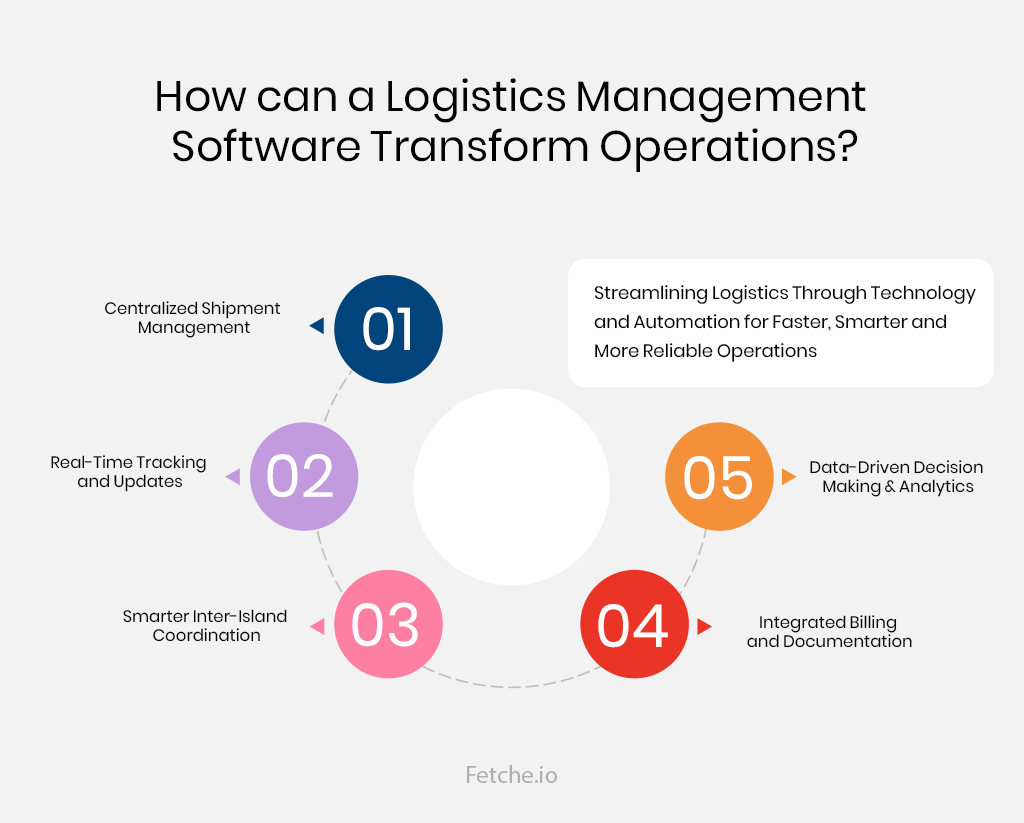
Let’s break this down practically:
- Centralized Shipment Management
Instead of managing bookings, tracking, and documentation across multiple tools, everything lives in one system. This means fewer errors, faster processing, and clear accountability.
- Real-Time Tracking and Updates
With a digital system, shipment updates are logged as they happen. Not hours or days later. This improves internal coordination and gives customers the visibility they expect.
- Smarter Inter-Island Coordination
For inter-island freight forwarding, timing is everything. Digital platforms help manage port schedules, transit milestones, and delivery handovers. All without relying on constant manual follow-ups.
- Integrated Billing and Documentation
Manual invoicing often leads to delays and disputes. Logistics management software links shipments directly to billing and documentation. This improves accuracy and speeds up cash flow.
Common Concerns About Going Digital
Despite the advantages that we just listed out, many logistics business owners hesitate before adopting new systems. And that hesitation is understandable. Let’s address the most common concerns:
- “My team is used to the current process”
Change always feels uncomfortable at first. But modern systems are designed to simplify work, not complicate it. With proper onboarding, teams adapt faster than expected.
- “Digital systems are expensive”
Manual inefficiencies are expensive too. The difference is that software costs are visible, while manual losses are hidden.
- “Our operations are too complex for software”
Complexity is exactly why software exists. A well-designed system handles complexity better than fragmented manual processes.
The Future of Philippine Logistics Is Mobile
Logistics in the Philippines will only grow more complex. More islands. More volume. More customer expectations. Manual systems will struggle to keep up. Businesses that invest in digital tools today will be better positioned to:
- Handle growth without chaos
- Improve service quality
- Control costs
- Build long-term customer trust
Moving from manual to mobile is not just a technology decision. It’s a business decision.
Why Fetche Fits the Philippine Logistics Landscape
Not all software works well in complex logistics environments. Fetche is built with real-world operations in mind. Especially for businesses dealing with multi-leg, inter-island movements. It supports:
- End-to-end shipment visibility
- Branch and agent coordination
- Scalable operations as volumes grow
- Mobile access for on-ground teams
For businesses searching for the best logistics management software in Philippines, the focus should not be on features alone. It should be on usability, adaptability, and long-term value.
Final Thoughts
Digital transformation is not about doing everything differently overnight. It’s about doing everyday operations better. For Philippine logistics businesses navigating inter-island freight forwarding and rising operational demands, modern logistics management software like Fetche offers a clear path forward.
Simple systems. Better visibility. Smarter growth. That’s what the future of logistics looks like.
FAQ
The Philippines’ archipelagic geography is too complex for paper and phone calls. Manual systems cause delays and errors during inter-island transfers, making it impossible to meet today’s tighter delivery timelines and higher customer expectations.
It replaces manual follow-ups with real-time tracking. Instead of calling branches or drivers, businesses and customers can see exactly where cargo is and receive accurate ETAs instantly through a centralized dashboard.
Digital tools sync sea schedules, port documentation, and inland transport. This ensures that all moving parts are coordinated, reducing the risk of a single missing document stalling an entire shipment across islands.
While software has a clear price tag, manual systems have hidden costs: extra manpower for follow-ups, penalties from delays, and lost customers. Digital transformation reduces these inefficiencies, leading to lower overall operational costs.
It doesn’t replace people; it provides them with better tools. Modern Logistics Management Software in Philippines simplifies daily tasks, reduces paperwork, and allows teams to focus on moving goods rather than chasing updates.
Fetche is specifically designed for complex, multi-leg movements. It supports end-to-end visibility and branch coordination, making it a practical choice for businesses looking to scale their inter-island operations without the manual chaos.