
Every product undergoes numerous processes before reaching the doorstep. From the factory to the customers’ hands, each product travels through 3 crucial stages- the first mile, the middle mile, and the last mile. These 3 phases are the backbone of supply chain logistics, where preparing, monitoring, and delivering goods, and everything in between, are carried out.
The first mile is the first milestone in delivery, where the products’ journey begins. Picking up goods from manufacturers, packing them, and preparing the parcel for travel from the warehouse to distribution centers takes place in the first mile. The middle-mile delivery connects these two hubs by managing the bulk transportation of all goods. The final mile is the last leg of delivery and the customer-facing stage where packages reach the doorsteps of customers. These three phases are equally important in supply chain management; each process under each phase contributes to the overall success of delivery and helps logistics companies earn trust and reputation. With modern technology, automation, and AI in logistics, these processes can be done efficiently, and supply chain management becomes smooth and systematic.
What is First-Mile Delivery?
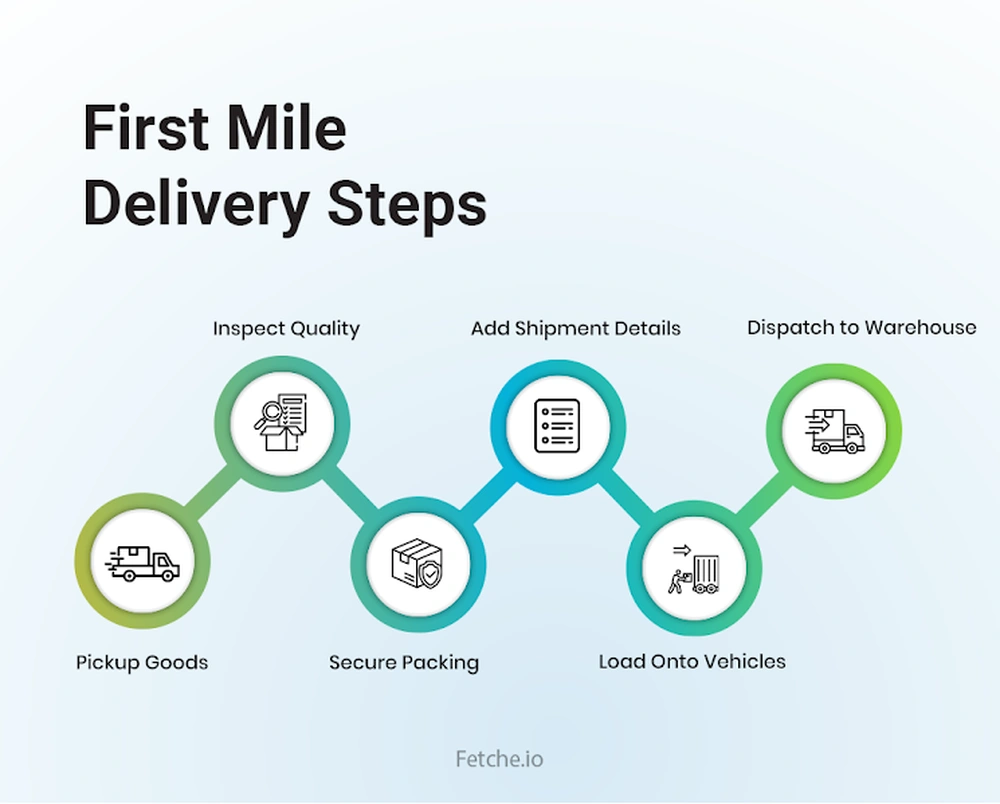
First-mile delivery is the first stage of the supply chain journey, where the process kicks off. From collecting goods from the manufacturers or producers and sending them to warehouses and distribution centers to the process of packaging and the initiation of transportation, everything comes under first-mile delivery processes. Picking up the goods, packing them, and preparing them for transportation are the processes taking place in first-mile delivery
Gathering of raw materials, collection of finished products, packing them appropriately to prevent damage, and placing them on carrying vehicles for other processes are included in the first leg of delivery. This stage is very crucial to handle, as it is the initial stage that sets the pace and the foundation of the whole delivery process. It should be handled carefully, as a single mistake of the wrong item, poor packing, or missing paperwork can lead to delays and costly errors throughout the entire supply chain.
Depending on the business, “first mile” can mean different things: for a factory, it’s moving finished goods to a distribution platform; for a retailer, it may be shipments from a local DC to stores; for e-commerce, it’s the seller’s pickup and handoff to a 3PL or courier. Movers and packers also treat the first mile as the collection of items from a customer’s home or store for onward storage or processing.
Challenges of First-Mile Delivery
Well begun is half done; this phrase is right in the supply chain because a good start in the first mile leads to a good finish at the final delivery, where you can bring a smile to every customer and earn the hearts of many. The first mile may not be visible to the customer, but it is the core of supply chain logistics. On the other hand, logistics companies face many challenges in this initial phase. Let’s have a look at the areas that make the first leg of delivery complex:
- Lack of focus on the first mile : Companies often overlook the first mile by giving importance to the final delivery to get appreciation from customers. This results in poor optimization, fragile packaging, errors, higher logistics costs, and many more impacts that directly affect the overall delivery experience negatively.
- Inaccurate picking and packaging : Poor attention to packaging causes errors in using appropriate packaging materials, which can cause damage to the products. Not considering the size and type of each product is the reason behind inappropriate packaging, material loss, and added operational costs.
- Wrong labeling and documentation : Following manual labeling and processing is a challenge. Also, important details such as item codes, weights, or destinations may get missed or be incomplete, which will lead to dispatch errors and slow processing.
- Limited inventory and visibility : If the company is not upgraded in the delivery market with advanced technology and modern logistics solutions, it will not be able to view real-time shipment tracking.
- Infrastructure limitations : Outdated warehouse systems, limited transport management systems, and other inadequate technological facilities are constraints for smooth first-mile delivery.
- Limited time and other external factors : Workers involved in first-mile logistics operations have limited and strict timelines to operate to prevent delays in the delivery process. Other factors such as traffic congestion, poor weather, and transport strikes add unpredictability and are challenges for it.
- High operational costs : Without upgrading to advanced logistics solutions, manual handling, rework, and poor route optimization techniques make the process costly and heavy.
What is Last-Mile Delivery?
The last mile is the final leg of the logistics journey, the movement of goods from a local distribution center or hub to the customer’s doorstep. This stage is also crucial as it is the customer-facing and cost-intensive phase. It is the moment when the customer receives the product and the company earns trust from every doorstep. Also, the last mile involves many delivery lots and stops where more fuel, labor, and vehicles are used. How accurately and quickly you perform this phase determines how the customer rates you and repeat purchases. Besides, the delivery person’s conduct is also valuable as he/she represent the company.
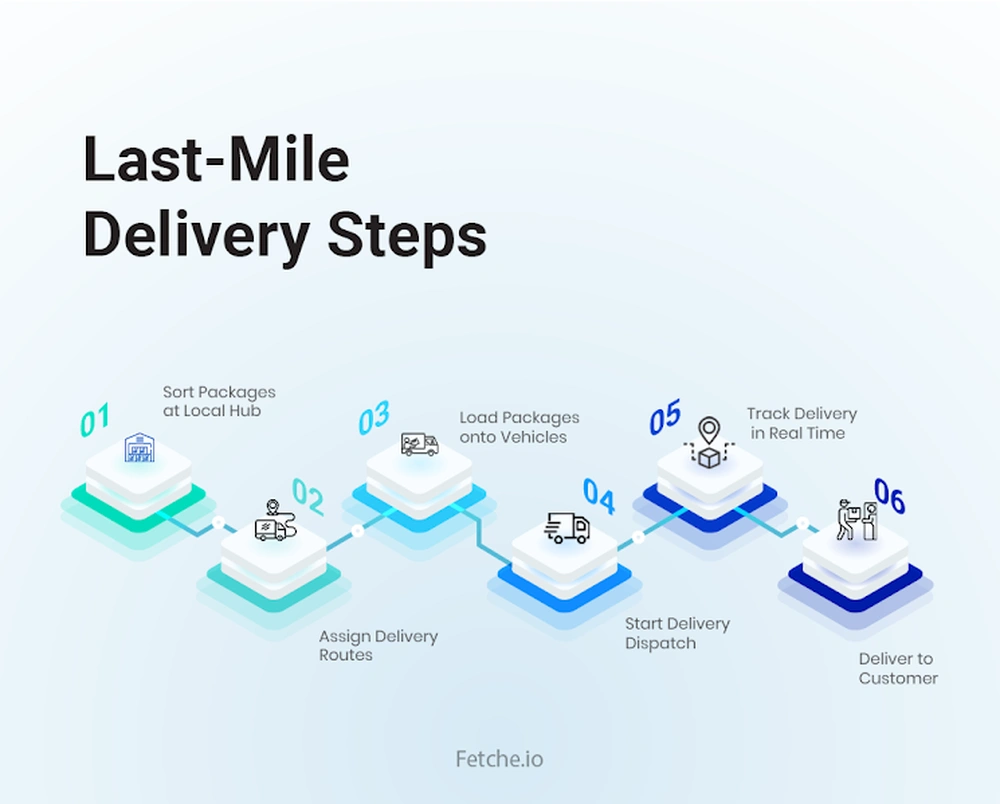
This is the point where consolidated freight is turned into individual, point-to-point deliveries, making the phase unique. The last-mile process usually starts with sorting at a local delivery hub. There, packages are grouped by delivery area, loaded onto vehicles, and dispatched along planned routes. Drivers and couriers then execute the deliveries, handling each parcel individually, confirming delivery, and often interacting face-to-face with the customer. A successful and organized last-mile delivery process can create an impact on the reputation of the logistics company.
Challenges of Last Mile Delivery
As it is the customer-facing stage in delivery, the last mile is also a complex stage. It is the stage that determines whether the company wins or loses in the customers’ minds. Here are the challenges faced by last-mile delivery nowadays:
- High delivery costs : This stage contains half of the total logistics costs, which include fuel expenses, driver wages, vehicle maintenance, and failed delivery attempts.
- Rising customer expectations : Customers expect fast, one-day delivery at no delivery cost with a real-time tracking facility, and most of the companies fail to meet this, negatively affecting brand reputation.
- Difficult routes and urban congestion : Drivers find it difficult to reach out to some rural areas due to poor roads, and in urban areas, they find it hard to arrive on time due to traffic congestion, leading to the wasting of fuel and time and delayed wrong deliveries
- Failed or missed deliveries : Incorrect addresses, unavailability of customers, or communication lapses lead to failed or missed deliveries, causing excess delivery costs.
- Lack of real-time visibility : Companies that are still following traditional ways in the supply chain process and not adapting to modern logistics management software lack real-time visibility on each process.
- Poor workforce and driver coordination : Coordination and communication between warehouse teams, drivers, and customer support is a hassle without a logistics management system, leading to mistakes in the delivery phases.
- Inefficient returns and reverse logistics : Returned goods create extra cost if they are not handled carefully and efficiently.
Key Differences Between First-Mile and Last-Mile Delivery
First mile and last mile- 2 ends of the supply chain, like two sides of the same coin. They are integral phases and serve distinct purposes and face different challenges, here’s a table that shows the difference between them:
| Category | First-Mile Delivery | Last-Mile Delivery |
| Stage in Supply Chain | Starts the delivery process, goods move from manufacturer/supplier to warehouse or distribution center. | Completes the delivery process, goods move from distribution center to the customer’s doorstep. |
| Main Goal | Get products into the logistics network quickly and accurately. | Ensure fast, safe, and convenient delivery to the customer. |
| Visibility | Usually low visibility, as it occurs behind the scenes and is not customer-facing. | Highly visible and customer-facing. |
| Stakeholders | Manufacturers, suppliers, logistics partners, warehouse teams. | Couriers, delivery agents, and end customers. |
| Shipment Type | Bulk shipments and consolidated loads. | Individual packages delivered to multiple destinations. |
| Operational Focus | Picking, packing, labeling, inventory, and documentation. | Route optimization, real-time tracking, and proof of delivery. |
| Technology Used | ERP systems, warehouse and transport management tools. | AI-driven delivery tracking, GPS, and route optimization software. |
| Cost Factors | Lower per shipment due to consolidation. | Higher per shipment due to decentralized and scattered routes. |
| Common Challenges | Poor labeling, packaging errors, lack of tracking visibility, time pressure. | Delays, failed deliveries, routing inefficiencies, and customer complaints. |
| Business Impact | Sets the tone for the rest of the supply chain; inefficiencies here cause downstream delays. | Defines customer experience; directly affects brand reputation and loyalty. |
Strategies to Optimize the Stages of Delivery
The phases of delivery face many challenges. Logistics companies can overcome these challenges through simple yet effective strategies. Here are some ways you can optimize the stages of delivery:
Use logistics software – A delivery tracking software like Fetche can help you handle all tasks under one platform, including handling data of pickup, warehouse, delivery, tracking, and everything under delivery management.
Integrate tracking and visibility tools – Integrate real-time tracking tools to present logistics systems for complete transparency across every delivery stage.
Improve warehouse organization – Maintain a structured warehouse layout, ensure efficient inventory management, and schedule pickups smartly to minimize delays in the first mile.
Leverage AI and route optimization – Use AI-driven route planning tools to optimize routes of delivery, and dynamically adjust routes based on real-time traffic or weather conditions.
Empower drivers with technology – Provide effective mobile apps to drivers for navigation, proof of delivery, and instant communication.
Enhance communication between workers – Maintain proper communication with staff to avoid mistakes and misunderstandings.
Keep the customers updated– Keep the customers updated about the delivery status with real-time notifications via SMS, email, or apps.
Focus on sustainability and cost-efficiency – Consolidate shipments, use fuel-efficient routes, use product-specific, eco-friendly packaging materials, and adopt recyclable packaging.
Build contingency and backup plans – Prepare for unpredictable events like weather, strikes, or vehicle breakdowns with alternative routes, emergency funds, and backup drivers.
Regular feedback and improvising – Gather reviews from customers, drivers, and workers in a regular period and refine strategies accordingly.
How Technology is Improving First and Last-Mile Delivery
From automating tasks to real-time tracking and delivery, technology has revolutionized the logistics industry, and the advent of AI has accelerated the shift. Technology turns manual processes into easy, accurate systems. As the supply chain industry becomes competitive, visibility and efficiency are at the core, and digital transformation makes the logistics companies lead the curve. Artificial Intelligence (AI) helps logistics companies plan and act better in first-mile and last-mile. Logistics software offers real-time visibility on processes and shipments to enhance overall productivity and customer satisfaction. Automation of labeling, documentation, etc. has reduced the extra time and mistakes caused by manual processing. With technological advancement, collecting valuable shipment data has become effortless. IoT is revolutionizing shipment visibility by connecting vehicles, warehouses, and even packages through smart sensors. Moreover, most of the companies focus on being sustainable, leaving less or no impact on nature, and today’s technology paves the way to more green logistics.
Among the known logistics software, Fetche stands out as a popular logistics management software.
How Fetche Optimizes First and Last Mile Delivery
In a world where logistics depends on speed, accuracy, and real-time visibility, managing multiple systems can slow everything down. Fetche.io solves this by bringing every stage of delivery, from the first mile to the last, into one smart, connected platform. It automates shipment tracking, uses AI for better decisions, integrates with your ERP systems, and gives you complete visibility across the supply chain.
Here’s how Fetche simplifies and strengthens modern logistics:
- Integrated modules ensure all delivery stages work together smoothly.
- Fetche connects inventory, warehouse, and transport operations on one platform.
- Real-time inventory tracking helps avoid stockouts and shipment delays.
- Warehouse automation speeds up sorting, packing, and dispatching.
- Transport schedules and driver assignments are automated for smooth pickups.
- Standardized labeling and digital records reduce packing and shipping errors.
- Teams work together through one system, avoiding miscommunication.
- Fetche plans and optimizes delivery routes for faster and cheaper deliveries.
- Real-time tracking keeps teams and customers updated until delivery is complete.
- Customer updates and feedback are managed easily through the CRM module.
- Analytics track delivery times, driver performance, and delays for improvement.
- Customer updates and feedback are managed easily through the CRM module.
- Analytics track delivery times, driver performance, and delays for improvement.
- Resource optimization reduces costs for fuel, labor, and time.
- Fetche scales easily to handle more deliveries as business grows.
The first mile and last mile are the most important phases of the supply chain, and the effectiveness and success of all logistics depend on how well these stages are handled. The first mile sets the pace for well-prepared shipments, while the last mile shapes a company’s reputation in customers’ minds through reliable delivery. Optimizing these phases makes all the difference—and Fetche makes it possible. As a powerful Logistics Management Software in Philippines and a scalable Logistics ERP software in Singapore, Fetche transforms delivery operations into a faster, more accurate, smarter, and fully connected logistics system. Switch to Fetche today and handle the first mile and last mile without a hitch.
Switch to Fetche today and optimize First Mile Delivery and Last Mile Delivery with ease
FAQ
First-mile delivery refers to the initial movement of goods from the seller or warehouse into the logistics network, including pickup, packing, and dispatch. Last-mile delivery covers the final stage, where shipments move from a distribution hub to the end destination. Both stages play a critical role in delivery speed, cost control, and service reliability.
Delays or errors during the first mile can disrupt the entire shipment lifecycle, while inefficiencies in the last mile directly impact delivery timelines and service quality. These two stages influence operational efficiency, customer satisfaction, and overall brand perception more than any other phase in logistics.
Typical first-mile challenges include incorrect documentation, delayed pickups, poor shipment visibility, and inefficient warehouse coordination. These issues often lead to downstream delays and increased logistics costs if not managed properly through structured processes and automation.
Last-mile delivery involves multiple delivery stops, traffic variability, route complexity, and time-sensitive coordination. These factors increase fuel costs, labor expenses, and operational risk, making last-mile optimization a priority for logistics providers and businesses.
Advanced logistics platforms enable real-time tracking, automated dispatching, route optimization, and performance monitoring across delivery stages. Solutions such as Logistics Software in Philippines and Logistics Software in Singapore help streamline operations by improving visibility, reducing delays, and enabling data-driven decision-making.
Optimized delivery operations result in faster order fulfillment, reduced operational costs, improved delivery accuracy, and better service consistency. Strong first-mile execution ensures smooth shipment flow, while efficient last-mile delivery strengthens reliability and customer trust.