
In 2026, the global supply chain has transitioned from a period of “post-pandemic rebalancing” into a new era of intelligent resilience. For enterprises, logistics is no longer a back office function; it has become a core strategic engine powered by integrated logistics. As market volatility persists due to geopolitical shifts and climate change, the ability to maintain predictable timelines and robust performance governance has become a primary competitive differentiator.
The traditional model of fragmented, siloed operations – where procurement, warehousing, and transportation function independently-is now a significant liability. To thrive, businesses are adopting a unified approach that synchronizes every node of the supply chain under a single, data-driven operating plan. This shift is accelerated by the rise of the digital supply chain, utilizing AI-driven forecasting, warehouse automation, and real-time control towers to ensure end-to-end visibility. By integrating these technological pillars, companies can achieve cost optimization and operational agility, transforming their logistics networks from rigid structures into responsive, self-healing ecosystems ready for the complexities of 2026.
The Evolution of Integrated Logistics
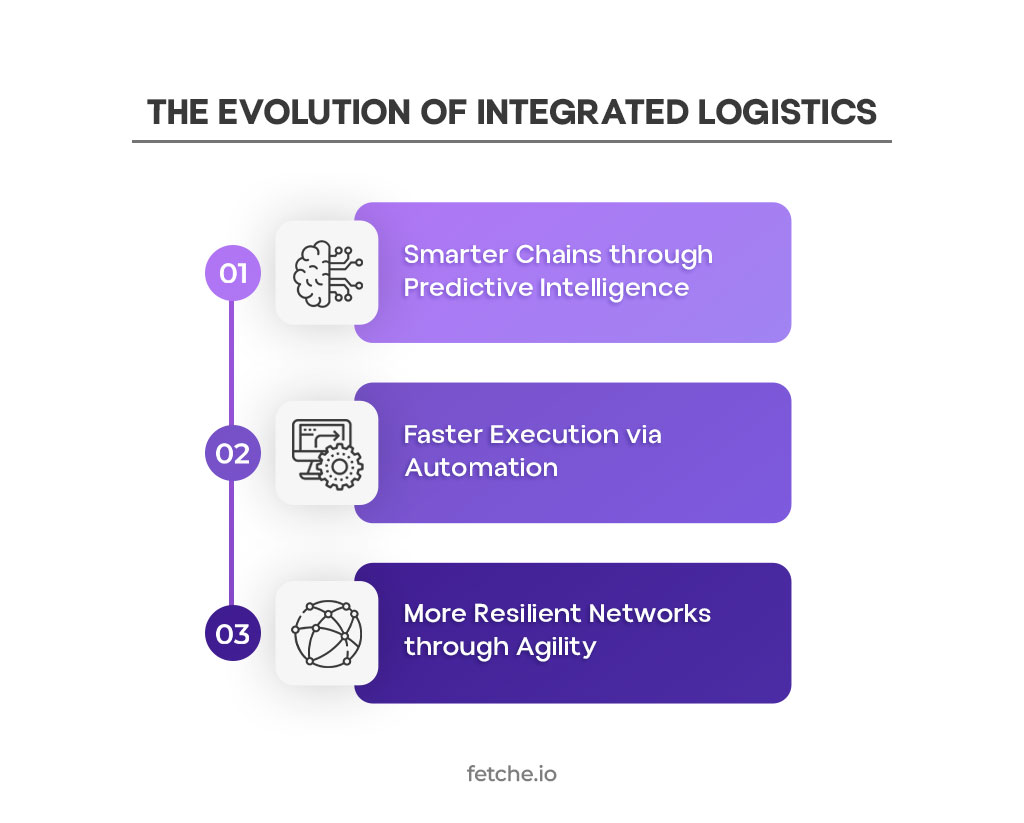
Integrated logistics in 2026 represents the synchronization of procurement, production, warehousing, transportation, and last-mile delivery into one connected ecosystem. This shift is driven by three primary pillars: intelligence, efficiency, and sustainability.
1. Smarter Chains through Predictive Intelligence
The hallmark of a 2026 supply chain is its ability to transition from “recording data” to “actively acting on it”.
- AI-Driven Forecasting: Advanced Artificial Intelligence (AI) now analyzes historical data alongside real-time market trends, geopolitical shifts, and weather patterns to provide precise demand predictions.
- Agentic AI: Moving beyond simple analytics, “agentic” AI systems can now execute solutions autonomously, such as renegotiating freight rates or rerouting shipments in real-time during port closures without human intervention.
- Digital Twins: Full network simulations—or Digital Twins—allow managers to test “what-if” scenarios, such as the impact of a sudden fuel price increase or a regional strike, before they happen.
2. Faster Execution via Automation
Speed in 2026 is achieved through logistics automation and a shift toward hyper-local fulfillment.
- Warehouse Robotics: Inside facilities, Integrated Logistics Management Software coordinates automated storage and retrieval systems (AS/RS) and robotics for picking and packing, significantly reducing human error and increasing throughput consistency.
- Micro-Fulfillment Centers (MFCs): To meet the demand for rapid last-mile delivery, businesses are shifting away from massive centralized warehouses toward automated urban “dark stores” that position inventory closer to the consumer.
- Real-Time Visibility: IoT-enabled tracking provides a “control tower” view of the entire network, allowing teams to manage exceptions while a shipment is still recoverable rather than reviewing errors at the end of the day.
3. More Resilient Networks through Agility
Resilience in 2026 is no longer just defensive; it is a competitive advantage.
- Diversification: Rather than just spreading risk, agile supply chains map their entire network to identify deep-tier concentration risks and build pre-negotiated contingency plans.
- Mode-Agnostic Logistics: Top-performing companies remain flexible in their transportation mix, shifting between truckload, rail, and air as cost and service dynamics evolve.
- Self-Healing Chains: By 2026, the goal is a “self-healing” chain where technology identifies a bottleneck and automatically triggers a contingency plan, ensuring continuity despite global volatility.
The Role of Logistics Management Software
At the heart of this transformation is Logistics Management Software (LMS). In 2026, LMS is the central nervous system that provides the necessary infrastructure for a Digital Supply Chain.
| Feature | Impact on Operations |
| Centralized Dashboards | Provides real-time visibility from supplier to final delivery. |
| Route Optimization | Uses AI to identify prime and alternative routes to minimize fuel costs and delivery times. |
| Inventory Management | Prevents overstocking and minimizes storage costs through smarter forecasting. |
| Automated Compliance | Speeds up cross-border logistics with automated documentation and billing. |
The benefits of integrated logistics in 2026 center on transforming a fragmented supply chain into a unified approach that drives both speed and stability.
The Strategic Importance of Integrated Logistics: Driving Efficiency in 2026
The benefits of integrated logistics in 2026 center on transforming a fragmented supply chain into a unified approach that drives both speed and stability.
- Operational Efficiency: By aligning every node under a single, data-driven operating plan, companies eliminate the “silos” that cause delays.
- Cost Optimization: Integrated systems allow for better resource allocation and reduced waste across warehousing and transportation.
- Real-Time Agility: Organizations can achieve faster response times to market shifts by using connected data to build more resilient supply chains.
- Enhanced Visibility: It provides the transparency needed for strict performance governance, ensuring that predictable timelines are met consistently.
- Improved Intelligence: A unified network simplifies the implementation of logistics automation, making the entire process smarter and more autonomous
Sustainability : The 2026 Mandate
Integration is a primary driver for meeting global sustainability demands in 2026. Because the network is planned as a whole, companies can optimize inventory positioning and route planning together to reduce carbon emissions rather than just shifting them from one node to another.
Key sustainable practices now include:
- Circular Logistics: Embedding repair, reuse, and recycling into the initial supply chain design.
- Green Last-Mile: Expanding the use of electric delivery vehicles and eco-friendly packaging.
- Blockchain for Transparency: Using blockchain to verify the environmental and labor standards of each shipment throughout its journey.
Conclusion: Preparing for the Future
For businesses looking to lead in 2026, the priority is clear: assess where fragmentation creates delays and visibility gaps, and invest in an integrated roadmap. By leveraging Logistics Management Software and embracing a Digital Supply Chain mindset, organizations can build the smarter, faster, and more resilient networks required to navigate the complexities of the modern global market etc
FAQ
Integrated logistics is a unified approach that synchronizes every node of the supply chain including procurement, warehousing, and transportation under a single, data-driven operating plan. It replaces fragmented, independent silos with a connected ecosystem to improve efficiency and visibility.
A digital supply chain uses real-time data and AI-driven forecasting to identify potential disruptions before they occur. This allows businesses to build more resilient supply chains by proactively rerouting shipments or adjusting inventory levels to maintain predictable timelines.
LMS serves as the central nervous system of the operation, providing the infrastructure for integrated logistics. It enables performance governance, optimizes costs, and coordinates logistics automation across the entire network.
Automation is essential for making supply chains smarter and faster. By integrating robotics in warehouses and automated tracking in transportation, companies can reduce human error, speed up fulfillment, and handle the complexities of modern omni-channel demands.
By aligning all supply chain activities, businesses can optimize routes and consolidate shipments more effectively. This reduction in “empty miles” and wasted resources directly contributes to lower carbon emissions and more sustainable operations.