
Running a small business comes with its own challenges, especially when it comes to managing warehouse operations. Manual processes often lead to errors, wasted time, and increased costs. However, a Warehouse Management System (WMS) can automate key warehouse functions. This will ultimately boost your bottom line. But what exactly is a WMS, and why should small businesses consider investing in one?
In this blog, we’ll explore the benefits of a WMS and how it can solve common small business problems. We will also guide you in choosing the right system for your needs.
Understanding Warehouse Management Software (WMS)
As the name suggests Warehouse Management Software (WMS) helps you manage your warehouse. Processes like receiving goods, storing goods, picking and packing orders, and shipping can be managed using this system. In other words, a WMS can automate the process of tracking your inventory instead of doing it manually.
If you think about it, these functions of warehouse tracking software can save you time and money. But just how much of a difference does it make when compared to manual inventory tracking?
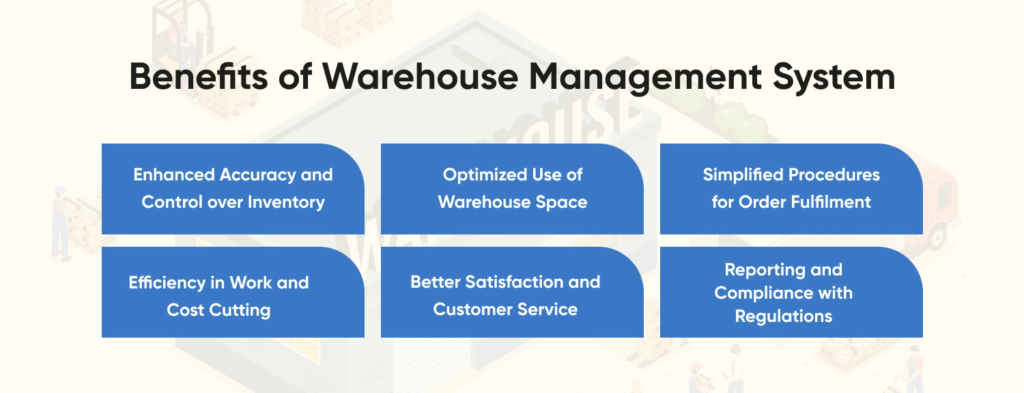
Let’s try to understand this difference with the help of an example. When an order is placed, an employee will have to cross-reference the order and the stock manually. But with a WMS in place, the order will automatically be marked as ready for packing if it is available. This saves you time and effort. In conclusion, manual inventory tracking often leads to errors and decreases the overall efficiency of your staff. On the other hand, a WMS can improve accuracy, enhance efficiency, and ensure better management of resources. Apart from this, there are a couple more benefits to using a WMS. Let’s take a look:
- Reduce labor costs.
- Get real-time visibility and control of your inventory levels.
- Speed up order fulfillment.
- Optimize warehouse space utilization.
- Automate mundane tasks like inventory replenishment, cycle counting, and order processing.
- Access to analytics tools for better demand forecasting and inventory planning.
- Scale your business easily.
- Enhance customer satisfaction.
Do Small Businesses Need a WMS?
A small business needs solutions that can solve their most urgent problems. And the most urgent problems of small businesses are budget constraints, high competition, and the pressure to satisfy customers. A Warehouse Management System can help small businesses in this regard. A good WMS can streamline operations to reduce costs and enhance customer satisfaction.
But what about the cost of getting a WMS? It might seem like a big expense at first. However, the return on investment can be significant. Think about it, by improving efficiency, reducing eros, and speeding up order fulfillment, a WMS can effectively save you money. In other words, the savings on labor costs, along with increased customer satisfaction and loyalty, can outweigh the initial cost of the system. After all, a WMS is an investment in the future of your business.
With WMS Vs. Without WMS
Here’s a quick comparison to highlight the difference between having a Warehouse Management System and managing your warehouse manually. Understanding these contrasts can help you see why a WMS is essential for your business.
| Without WMS | With WMS |
| Manual inventory tracking Prone to errors Slow order processing Limited visibility into inventory Higher labor costs Not easy to scale your business | Automated inventory tracking Eliminated errors Faster order processing Real-time visibility into inventory Reduced labor costs Easy to scale your business as it grows |
How To Choose The Right WMS For Your Business
Are you a small business considering investing in a WMS? We understand how big of a decision that is. So it is important to put in the effort to choose the best WMS for small businesses. To that end, we have compiled a list of factors you should look for when investing in a WMS. Ask yourself these questions before you choose your warehouse management system:
1. What are your needs?
Make a list of all the features that are essential for your business. This could be something as simple as inventory control or something a bit more complicated like advanced analytics for demand forecasting. Once you have a list, you can choose the right WMS for your business.
2. Can the WMS grow with your business?
The right WMS should not only solve current challenges. It should also be able to adapt to future growth. Think about it this way: Your business is growing quickly and more orders are flowing in. In this scenario, your WMS must have the capability to grow or scale with your business. Consequently, you have to pick a WMS that can handle the increased load.
3. Is the system user-friendly and easy to use?
Why did you decide to invest in a WMS in the first place? It was to simplify warehouse operations, wasn’t it? So pick a WMS that is easy to use. Go for a system that is user-friendly and easy to learn. This way you won’t have to waste too much time and resources training personnel to use the software.
4. Is it a standalone system or an integrated system?
There are two kinds of Warehouse Management Systems to choose from:
- Integrated WMS
- Standalone WMS
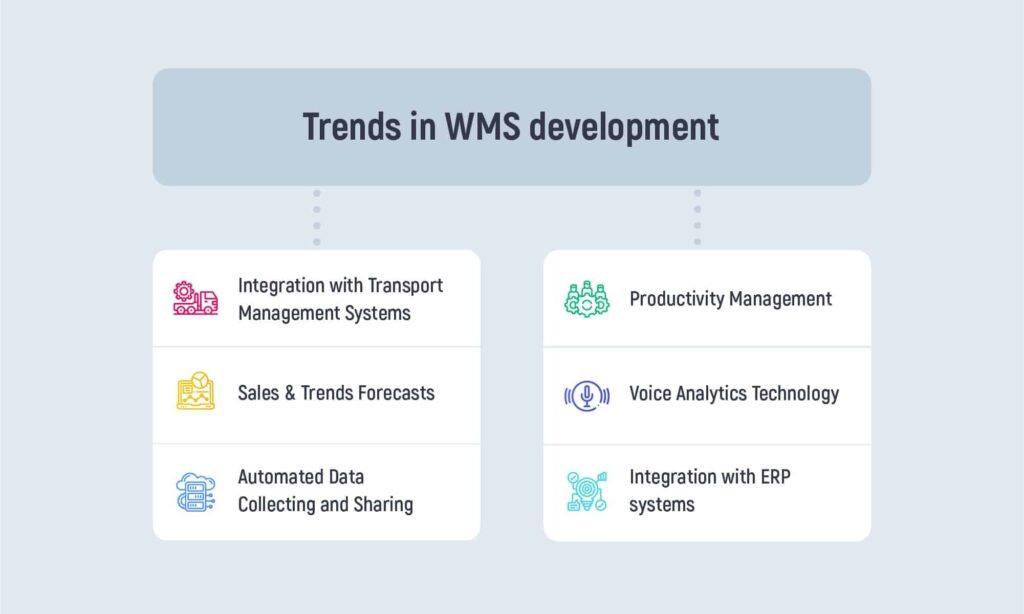
An integrated WMS is an add-on module in an ERP. An ERP for warehouse management can handle invoicing, accounting, and inventory management. Consequently, with an integrated WMS you get all these functions combined into a single system. On the other hand, a standalone WMS is dedicated to warehouse management and may lack broader business functionality.
5. How much would it cost you?
Last but not least, we have to calculate the total cost of setting up a warehouse management system. When calculating the costs, make sure you add the total cost of ownership, including implementation, training, and ongoing support. The final amount that you arrive at has to fit your budget.
Conclusion
Investing in a Warehouse Management System can seem like a big step for small businesses, but the benefits are clear. From reducing errors and labor costs to enhancing inventory management and customer satisfaction, a WMS can transform your warehouse operations. Moreover, by choosing the right system you’re not only solving today’s problems but also preparing for tomorrow’s opportunities. Remember, the right WMS is an investment in your business’s future success.
FAQ
Honestly, yes and you’ll notice the difference faster than you think. Manual tracking works until it doesn’t. Misplaced stock, slow order processing, and human errors quietly eat into your profits every single day. A WMS automates the repetitive stuff picking, packing, replenishment so your team can focus on what actually moves the business forward. The efficiency gains alone tend to cover the cost of implementation over time.
Small businesses actually have more to gain from a WMS than you’d expect. Budget pressure and customer expectations don’t shrink just because your operation is small. A WMS helps you fulfil orders faster, keep stock levels accurate, and reduce labour costs all things that directly impact whether customers come back. It’s less about the size of your warehouse and more about how smartly you run it.
Singapore’s logistics and retail landscape moves at a pace where delays or stock errors can cost you a customer permanently. A Warehouse Management System in Singapore gives businesses real-time inventory visibility, faster order turnaround, and the ability to scale without adding headcount. Whether you’re in e-commerce, manufacturing, or distribution, having your warehouse operations tightly controlled gives you a measurable edge over competitors still running on spreadsheets.
Start with your own pain points before looking at features. Do you struggle with order accuracy? Slow fulfilment? Poor stock visibility? Once you know what’s hurting your business, you can match it to the right system. Beyond features, check if it can grow with you, how easy it is for your team to learn, and what the total cost looks like including training and support. A fancy system nobody uses properly isn’t worth a rupee.
Absolutely. Small and mid-sized businesses across the Philippines are increasingly dealing with rising customer expectations and tighter margins especially in retail and e-commerce. A Warehouse Management System in the Philippines helps these businesses automate stock tracking, cut down on fulfilment errors, and handle growing order volumes without proportionally growing their team. The return on investment shows up in fewer errors, faster shipping, and customers who keep coming back.
Great question, and it’s one worth thinking through carefully. If your ERP already handles invoicing, accounting, and inventory, an integrated WMS module might be all you need it keeps everything in one place and avoids the hassle of syncing separate systems. A standalone WMS, on the other hand, goes deeper into warehouse-specific functions but may need to talk to your other tools. For businesses using a Warehouse Management System in India, where operations often span multiple locations and SKUs, an integrated approach tends to work well but if your warehouse complexity is high, a dedicated WMS gives you more control and precision.